A boho living room looks collected, not bought, and the difference comes from layers rather than from how many things are in the room. A plain sofa and a bare floor can turn boho in a weekend if you add the layers in the right order: rug first, then natural materials, then textiles, then plants, then the walls, and warm light at the very end.
Quick answer: Start with a big jute or natural-fiber rug, add one or two rattan or wicker pieces, mix pillows in three patterns that share a color, bring in more plants than feels necessary, and finish with a gallery wall and low, warm lamps.
Below, each layer in the order I’d add it, what it does, and where it can go wrong. After that: how to make it work with a gray couch you already own, and how the look changes from earthy to colorful.
Start with a natural-fiber rug
The rug does more for a boho living room than any accessory, because it covers the biggest surface in the room and sets the texture for everything else.
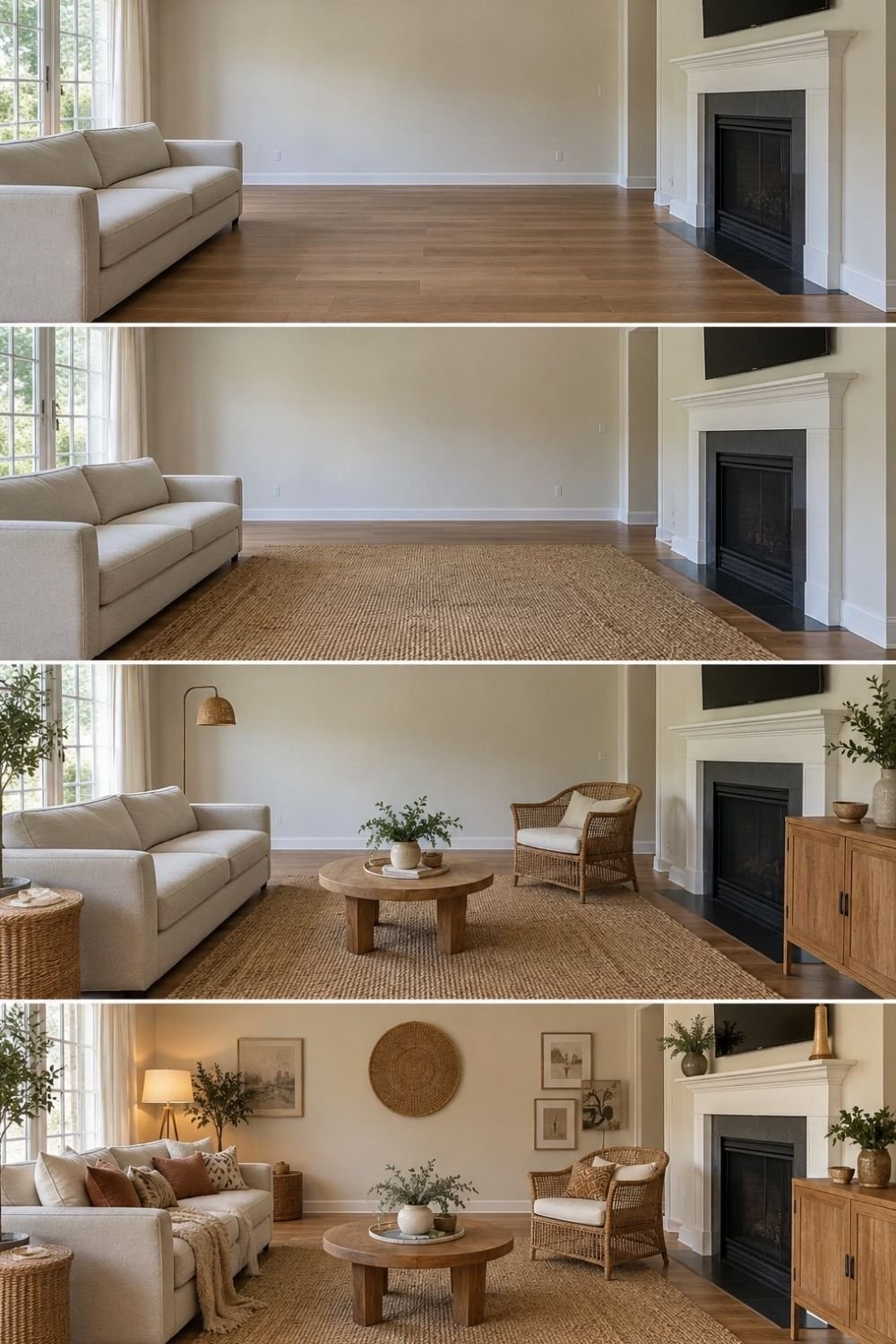
Photo by OurHoneyHome
The four frames above show one room built up layer by layer. First, it’s just a cream sofa, a white fireplace and a bare wood floor. The second frame adds a large jute rug, and the room already looks warmer. The third adds furniture in natural materials: a round wood coffee table with a potted plant, a rattan armchair with a cream cushion, a rattan-shaded floor lamp, a woven side table, an olive tree and a wood sideboard. The last frame adds the soft layers: rust, cream and patterned pillows, a knitted throw, a woven wall basket, framed prints and a lit table lamp.
What to look for in the rug:
- Size: big enough that the front legs of the sofa and chairs sit on it. A small rug floating in the middle makes the whole room look smaller.
- Material: jute and sisal look the most boho and cost less than wool, but they’re rough underfoot and hard to clean. A jute-wool blend or a flat-woven cotton rug is softer.
- Layering: a smaller vintage-style or kilim rug laid over a big jute one adds pattern without committing the whole floor to it.
Add rattan and woven pieces
Rattan, wicker, cane and seagrass are the materials people recognize as boho immediately. One or two pieces are enough to set the tone; a whole room of them starts to look like a patio.
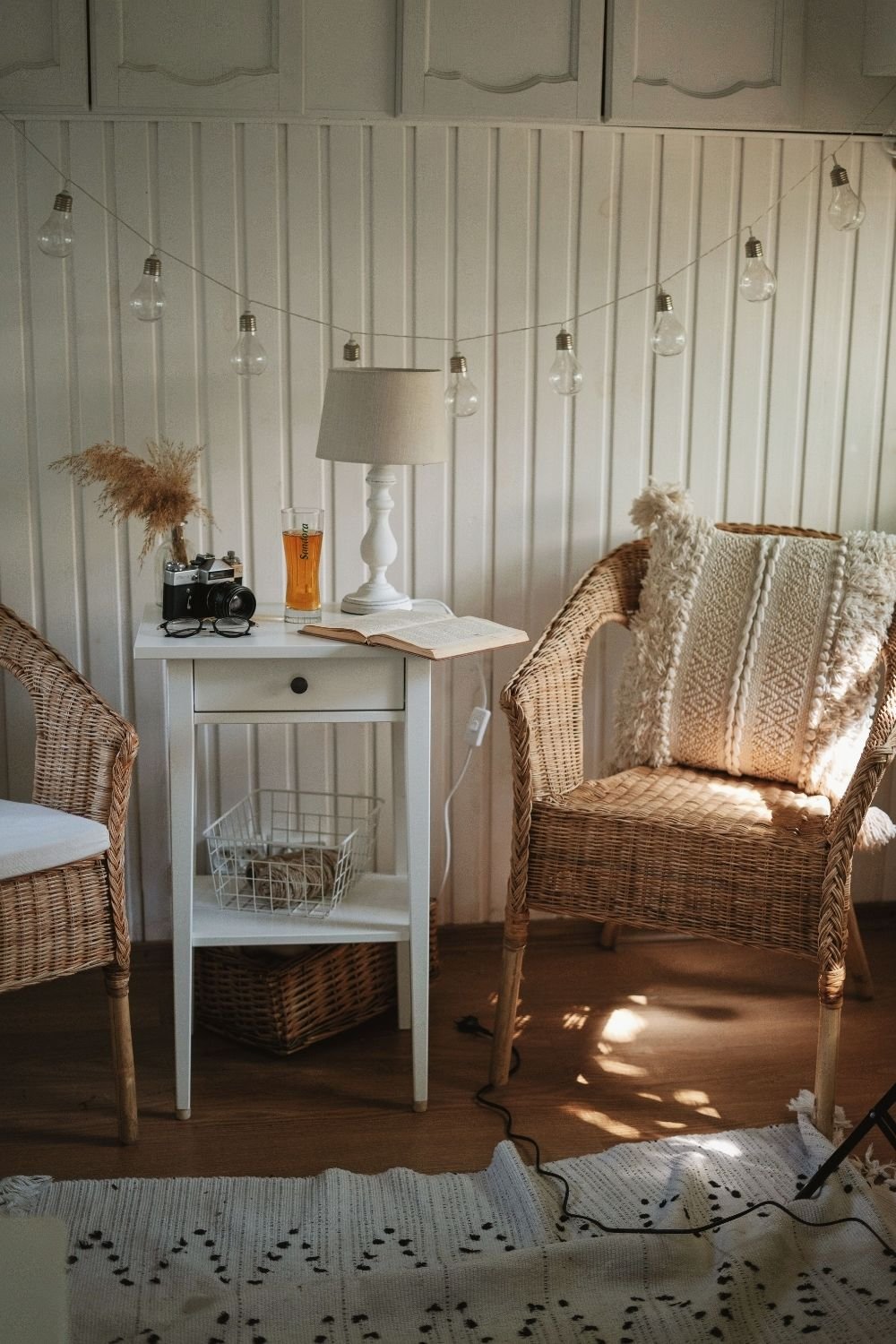
Photo by Olena Bohovyk on Pexels
Two wicker armchairs flank a small white side table here. On the table: a lamp with a linen shade, a vase of pampas grass, an open book and a vintage camera. On one chair, a cream pillow with tufted stripes and fringe. Behind them, a string of bulb lights runs across white paneling, and a wire basket and a wicker basket fill the shelf underneath. It’s a small corner, but it has everything the style needs: natural fiber, a little fringe, a warm lamp and dried grasses.
Good places for woven pieces:
- An accent chair in rattan or wicker, next to the sofa or across from it.
- Baskets for blankets, magazines and plants, on the floor or on a lower shelf.
- A pendant or lamp shade in rattan or seagrass, which throws patterned light on the walls in the evening.
- Woven wall baskets or plates, hung in a group.
Mix pillow patterns (with a plan)
Mixed patterns are what make boho look relaxed. They also make it look chaotic when they don’t share anything, so it helps to have a rule.
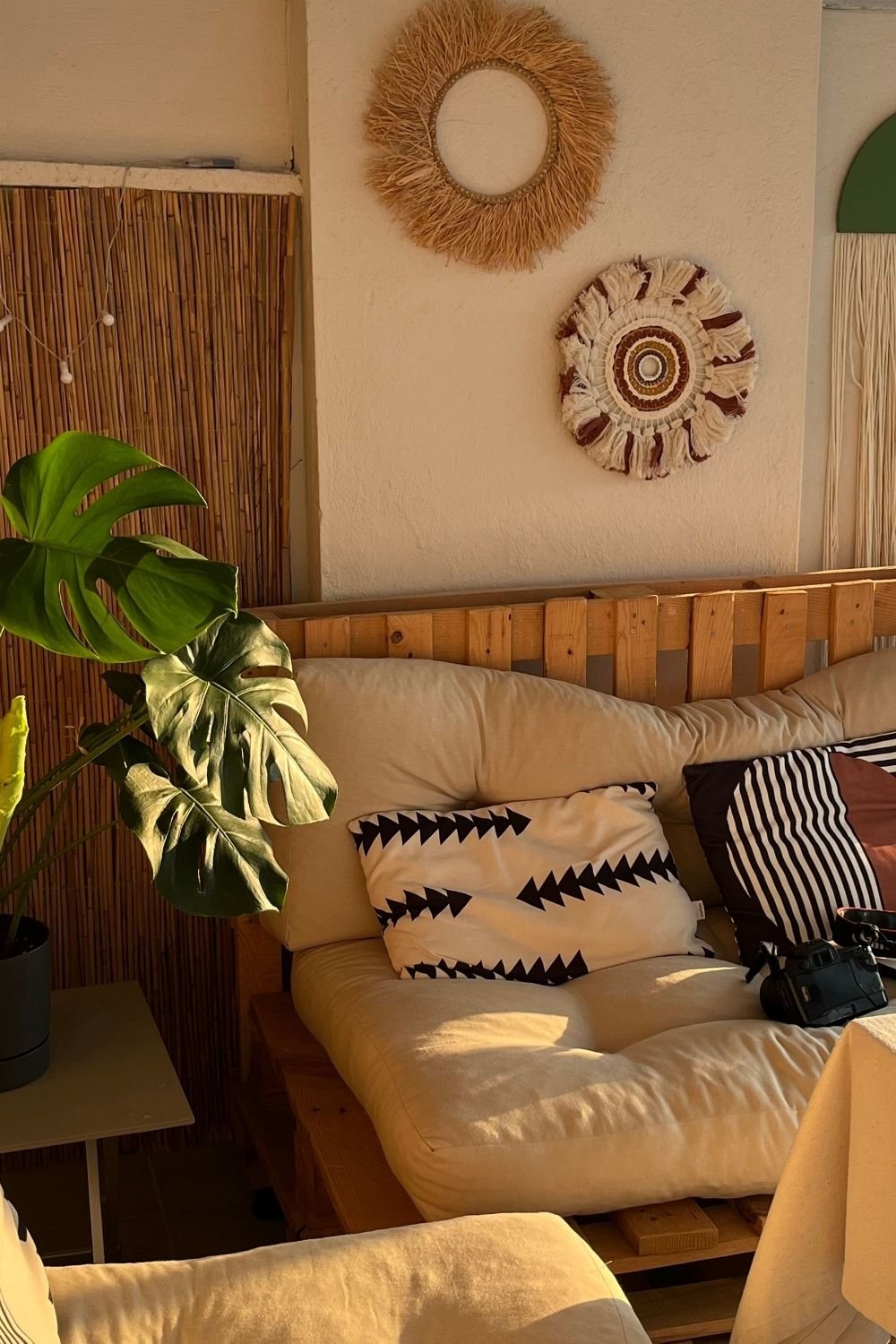
Photo by Mine Canan Göldaf on Pexels
On this pallet-wood sofa with thick cream cushions, the pillows stick to black, white and one earthy rust: a cream pillow printed with black arrow shapes and a striped one with a block of rust. Above the sofa, a raffia sun mirror and a round woven wall hanging in cream, rust and mustard repeat the same colors. A bamboo screen, a monstera and a strand of string lights complete the corner, and the low sun does the rest.
The rule that makes pattern mixing work:
- Pick two or three colors and make every pillow use at least one of them.
- Vary the scale: one large pattern, one small pattern, one solid or textured.
- Vary the texture: linen, velvet, a tufted or fringed pillow, a knit.
Three to five pillows on a standard sofa is usually plenty. More than that, and you spend the evening moving them.
Bring in more plants than you think
Plants are the one boho layer almost nobody overdoes. Trailing pothos, a tall fiddle leaf or olive tree, a snake plant in a basket, a monstera by the window: the room gets softer with each one.
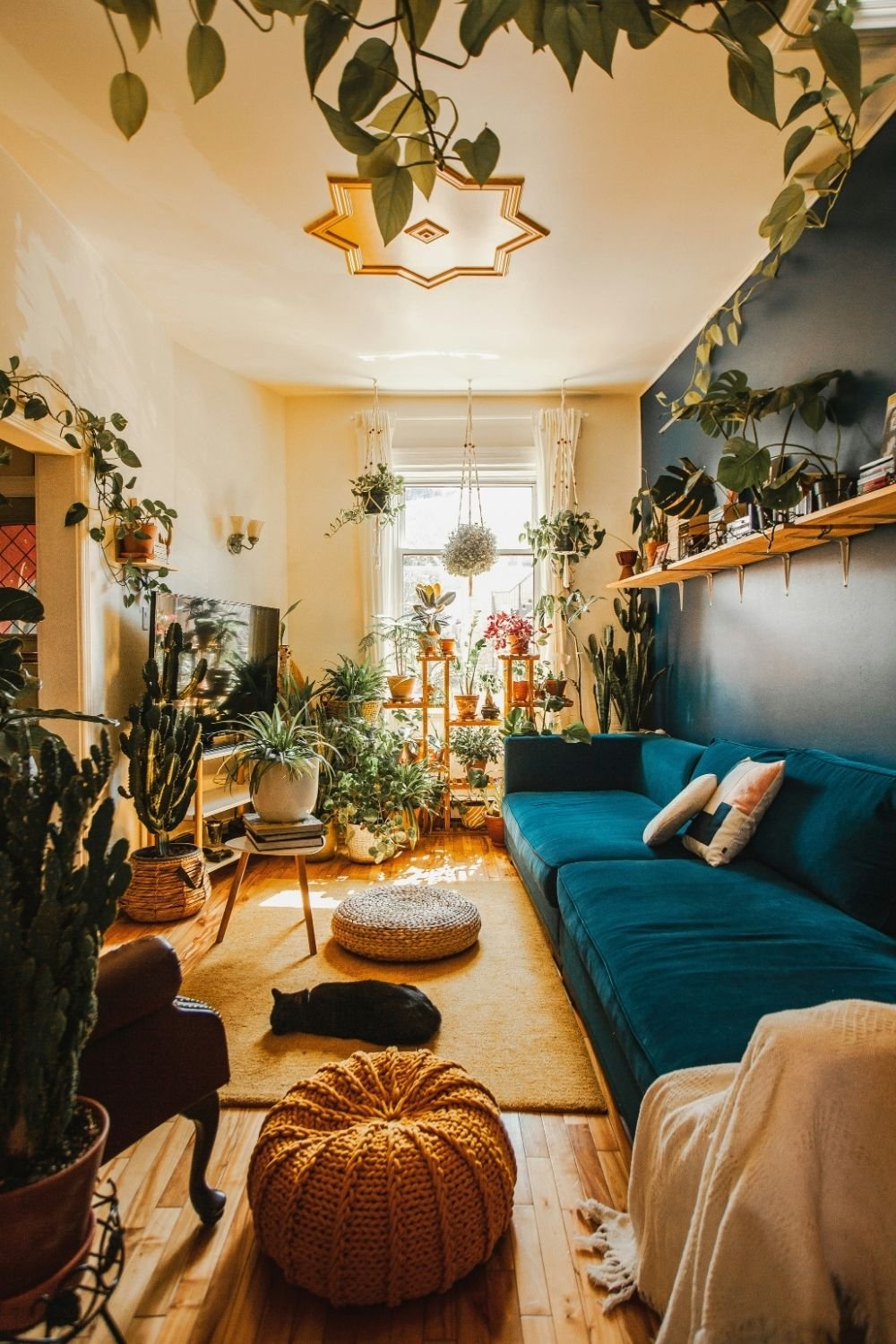
Photo by Lydia Mailloux on Unsplash
This narrow living room shows how far you can take it. A teal velvet sofa sits against a deep navy wall, with a long wooden shelf of plants and books above it. At the far end, a bamboo plant stand in front of the window holds a whole collection of pots, and planters hang from the ceiling in macramé holders. A pothos trails right across the ceiling. On the mustard rug, a knitted pouf and a woven jute pouf give extra seating (and a spot for the cat).
To make a lot of plants look intentional rather than accidental:
- Group them by the light, close to windows, instead of spreading them evenly.
- Use different heights: floor plants, plants on stands and stools, hanging planters.
- Stick to two or three pot materials, such as terracotta, woven baskets and plain ceramic.
If you have pets, check which plants are safe before buying. Some common houseplants, pothos among them, are toxic to cats and dogs if chewed.
Build a gallery wall on the floor first
A wall of frames, baskets and textiles is the boho living room’s signature. The easiest way to get it right is to plan it on the floor before a single nail goes in.
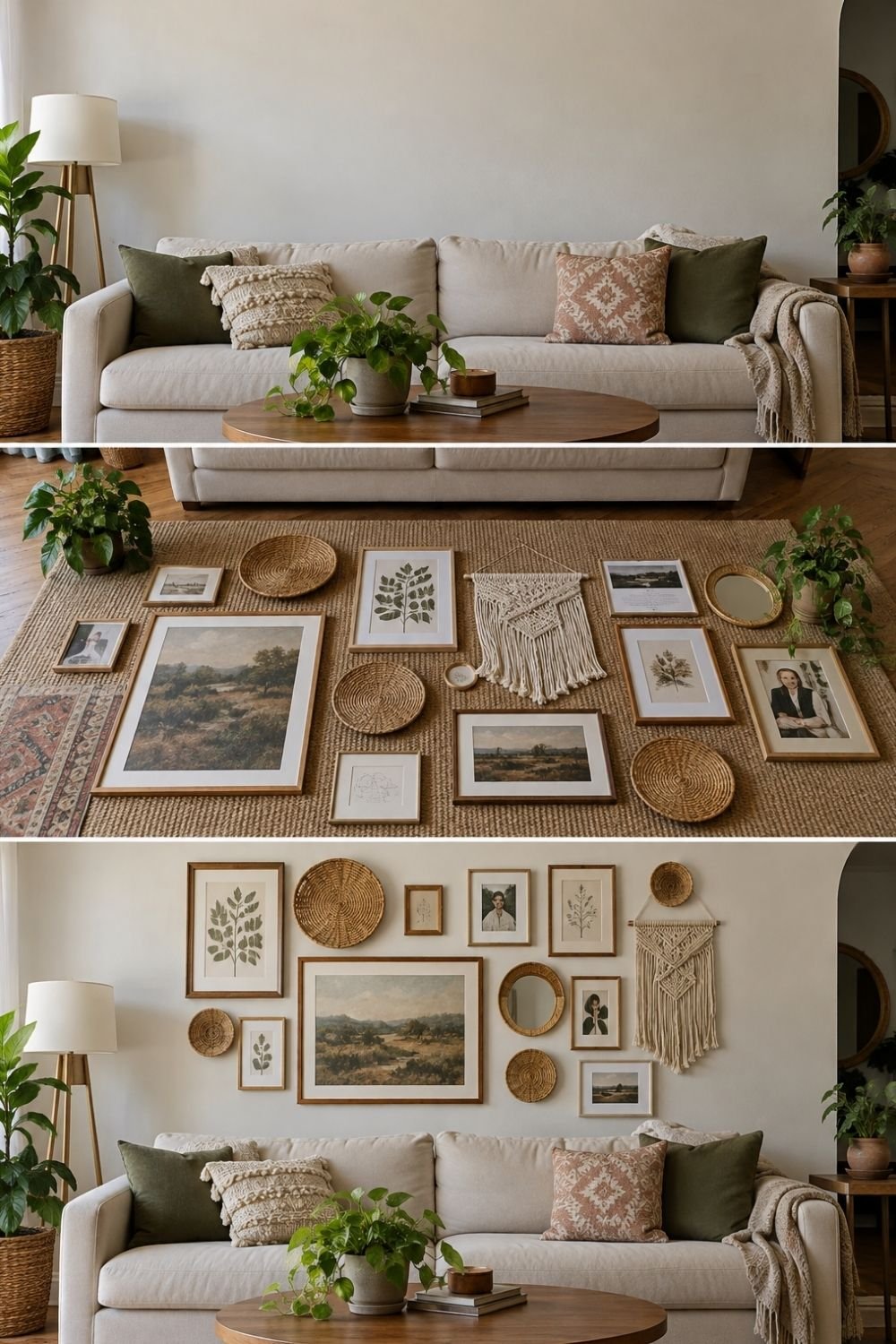
Photo by OurHoneyHome
The top frame shows the starting point: a cream sofa with olive, cream and terracotta pillows, a floor lamp, a few plants and a completely blank wall above. In the middle frame, everything for the wall is laid out on a jute rug: framed landscapes and leaf prints in wood frames, woven baskets in different sizes, a macramé hanging, a small round mirror and a portrait. The bottom frame shows the same layout on the wall, centered over the sofa.
A few tips:
- Start with the biggest piece slightly off-center, then build around it.
- Mix frames with three-dimensional pieces, such as baskets, a mirror or a macramé. A wall of only frames looks more formal.
- Keep the gaps roughly even, about 2 to 3 inches between pieces.
- Photograph the floor layout before picking it up, so you can copy it onto the wall.
Renters can hang lighter pieces (baskets, macramé, unframed prints) with removable hooks, and lean the heavy frames on a shelf or a picture ledge instead.
Warm, low light
Boho rooms look best in the evening, lit by several small lamps rather than one ceiling light. A rattan or paper shade, a floor lamp in the corner behind the sofa, a table lamp on the sideboard and a string of warm lights along a shelf together give the soft, patterned glow in the photos above. Warm bulbs matter here, around 2700K. Cool white light makes natural fibers look gray.
Make a boho corner
If a whole room feels like too much at once, start with one corner. It’s a small project that shows you whether the style suits you.
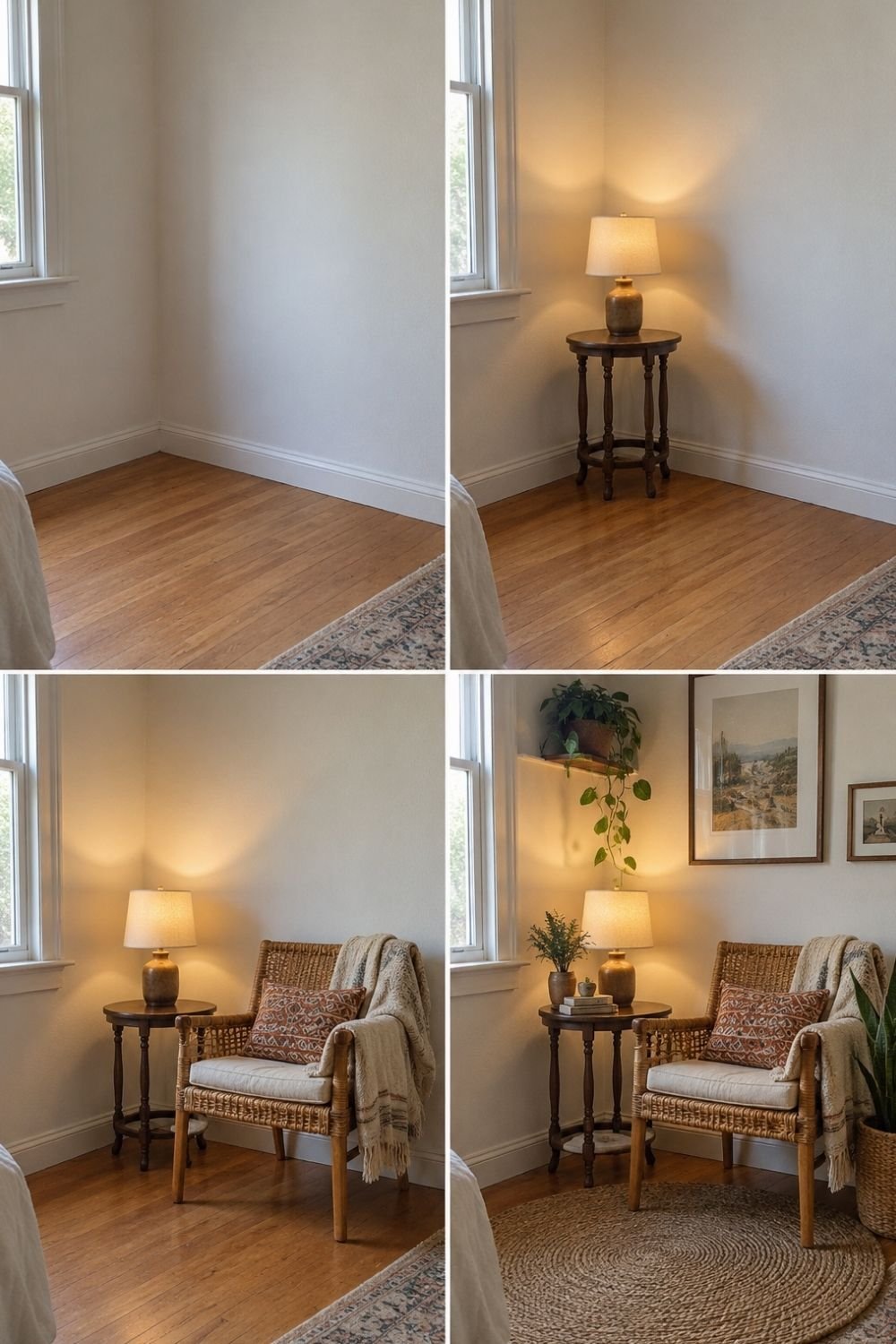
Photo by OurHoneyHome
This empty corner next to a window gets a dark wood side table with a ceramic lamp first. Then a rattan armchair with a cream cushion, a patterned pillow and a fringed throw. The last frame adds a round jute rug, a small corner shelf with a trailing pothos, two framed landscape prints, a snake plant in a basket, and a small plant and a stack of books on the table. It’s a reading spot now, and the window reading nook post has more ideas for making one.
A boho living room with a gray couch
Plenty of people want a boho living room and already own a gray couch. The good news is that gray works well as a base, as long as the layers around it are warm.
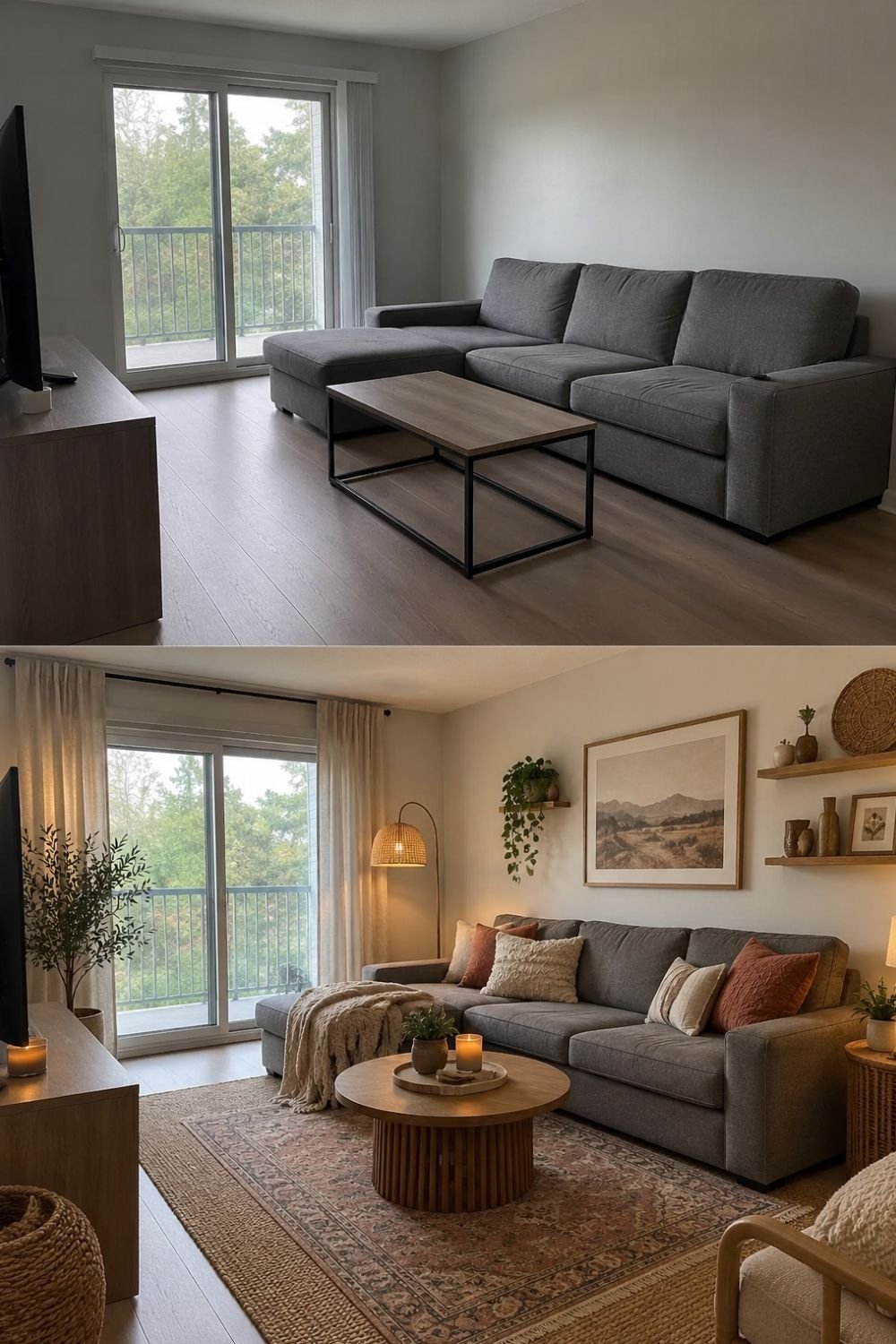
Photo by OurHoneyHome
The “before” is a very typical apartment: a gray sectional with a chaise, a rectangular coffee table with a black metal frame, bare white walls and vertical blinds. The “after” keeps the same couch and changes everything around it:
- A patterned vintage-style rug in rust and cream, layered over jute.
- A round, fluted wood coffee table with a tray, a small plant and a candle, in place of the metal one.
- Pillows in rust, terracotta, cream and stripes, plus a chunky knit throw over the chaise.
- Linen curtains hung high and wide in place of the blinds.
- A rattan arc floor lamp, an olive tree and a woven side table.
- A large landscape print, floating shelves with ceramic vases, a woven plate and a trailing plant.
The gray couch stays gray, but now it’s surrounded by rust, wood and cream, and the whole room reads as a warm gray boho living room instead of a plain rental. If you’re also rethinking where the couch goes, the sofa layout guide walks through the options.
Neutral, earthy or colorful?
All the layers above work in three moods:
- Neutral boho: cream, sand, white and natural wood, with texture doing all the work. Calm and easy to live with.
- Earthy boho: rust, terracotta, olive and mustard with jute and rattan. The version most people picture.
- Colorful boho: saturated jewel tones, bold art and pattern everywhere.
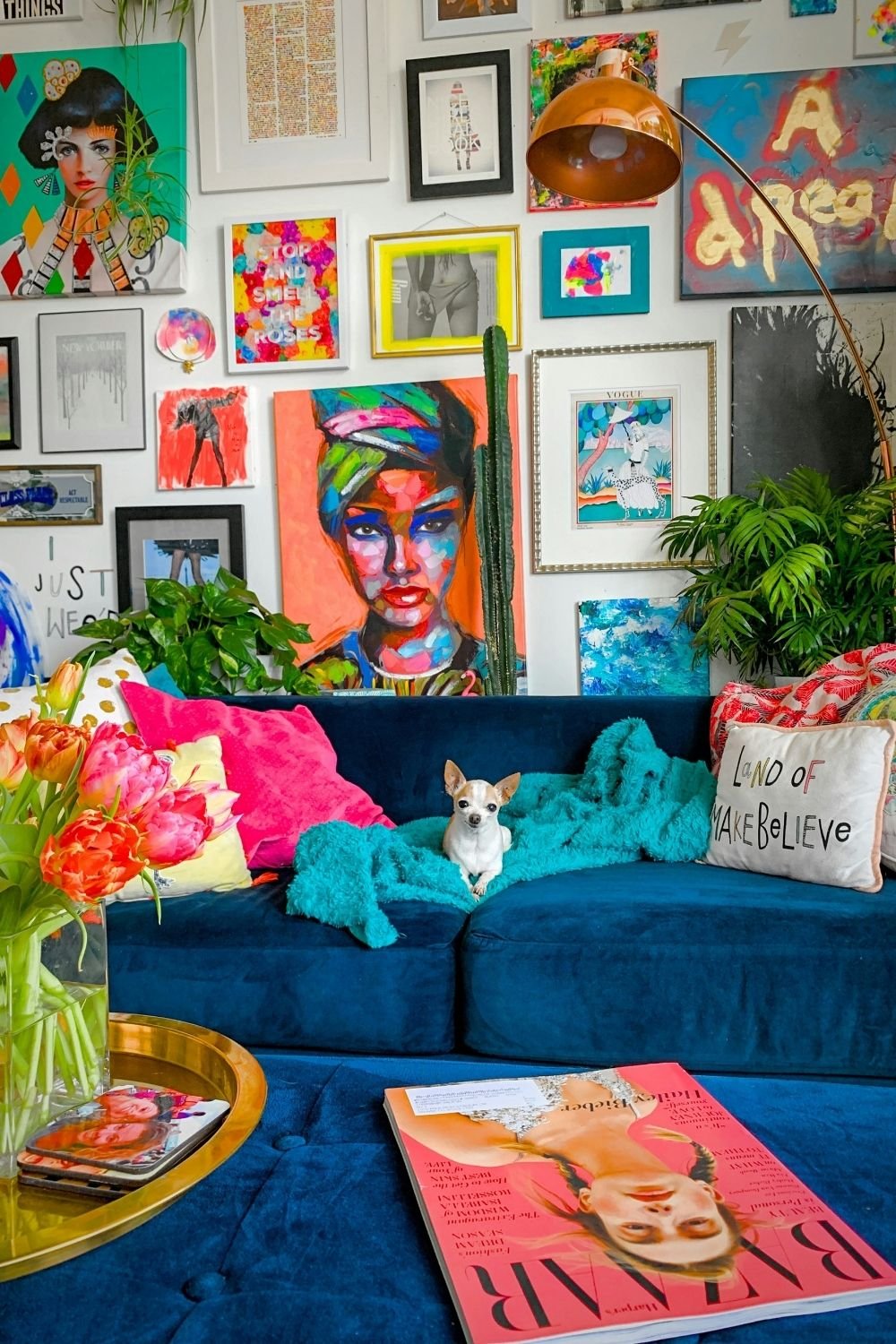
Photo by Steph Wilson on Unsplash
The colorful end looks like this: a navy velvet sofa with a matching tufted ottoman, a wall covered edge to edge in bright paintings, prints and posters, a copper arc lamp, a tall cactus and palms, pink, yellow and teal pillows, a teal faux-fur throw (claimed by a very small dog), and a brass tray with orange and pink tulips. It’s maximalist, but it still follows the same layers: rug, textiles, plants, wall, light.
For a version rooted in African textiles, woven baskets and carved wood, the Afrohemian decor post goes deeper.
A small boho living room
In a small room, the same layers just need editing:
- One large rug instead of several small ones, so the floor reads as one surface.
- Wall-mounted shelves and hanging planters to keep plants off the floor.
- One statement wall (a gallery wall or a large textile), with the other walls kept plain.
- Poufs instead of armchairs, since they add seating without blocking the view across the room.
Boho living room checklist
- A large jute or natural-fiber rug
- One or two rattan or wicker pieces
- Three to five pillows in patterns that share two or three colors
- A knitted or fringed throw
- Plants at three different heights
- A gallery wall planned on the floor first
- Several warm, low lamps instead of one ceiling light
In short: build the room from the floor up, keep the colors connected, and let it grow over time. A boho living room is never quite finished, and that’s what makes it look collected.
