Picture yourself in the paint aisle, holding a black swatch up to the light. You like it. You can already see it behind the bed or the sofa. And then that little voice kicks in, the one that’s heard the same warning a hundred times: dark colors make a room look smaller. So the swatch goes back on the rack, and you walk out with another can of greige.
I think that warning is one of the most repeated half-truths in decorating. A black accent wall can absolutely make a room feel smaller and gloomier. It can also make a room feel deeper, calmer and more finished than any light color would. The difference comes down to which wall you pick, the finish, and the light around it.
Quick answer: No, a black accent wall doesn’t have to make a room look smaller. Paint the wall you face when you walk in (not the window wall), use a matte or eggshell finish, keep the other walls and ceiling light, and add warm lamps so the black never looks like a hole.
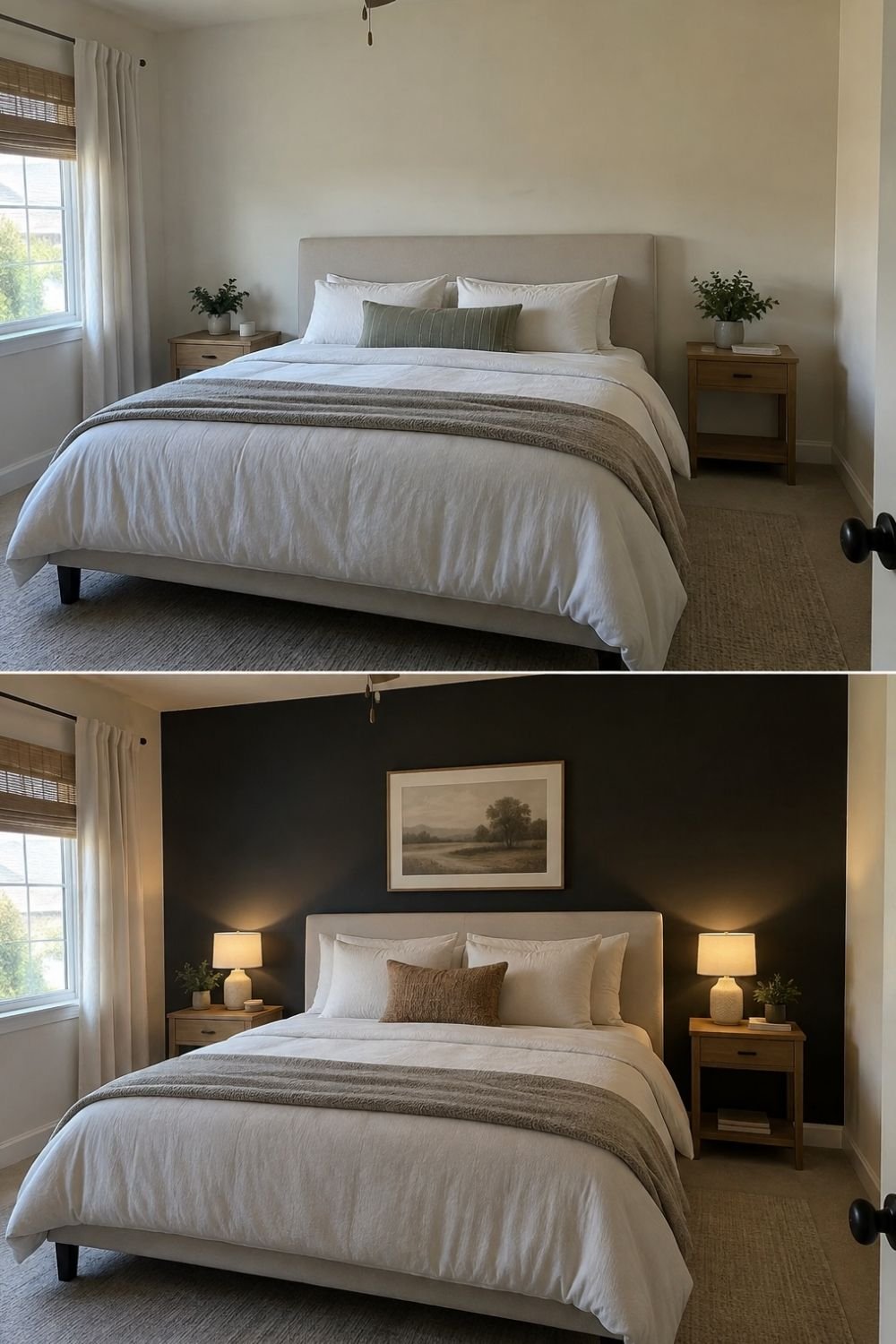
Photo by OurHoneyHome
The before-and-after above is a good test case. The top frame shows a pleasant but forgettable bedroom: cream walls, a light upholstered bed, white bedding, two wood nightstands with plants. In the bottom frame, only the wall behind the bed has changed. It’s now a soft black, with a framed landscape print above the headboard and two ceramic lamps glowing on the nightstands. The bed, the bedding, the window and the carpet are all the same. The room doesn’t look smaller. If anything, the bed looks more deliberate, and the wall seems to sit farther back.
Why black can make a room feel bigger
A light wall shows you exactly where it ends. You see the corners, the scuffs, the shadow lines where the wall meets the ceiling. A dark matte wall does the opposite: the edges soften and the eye can’t judge distance as easily, so the wall seems to recede. It’s the same reason a dark stage backdrop makes a stage look endless.
Black also does something useful for the furniture in front of it. A light sofa, a wood console, a white bed frame or a gold mirror all pop against it, like objects in a gallery. The room looks curated rather than crowded.
Where it goes wrong is when the black fights the room: the wrong wall, a shiny finish, a dim room with one overhead bulb. So let’s go through the usual fears one by one.
Fear #1: “It’ll close the room in”
This one is mostly about wall choice. A few guidelines:
- Paint the wall you face when you walk in. It becomes a backdrop and pulls the eye through the room, which makes the space feel longer.
- Behind the main piece of furniture works almost every time: the wall behind the bed, the sofa, or the TV.
- Avoid the window wall. With light coming from behind it, a black window wall looks like a dark frame around a bright rectangle, and the contrast is tiring.
- Skip walls that are broken up by lots of doors, unless you paint the doors black too.
- In a narrow room, paint one of the short end walls, not a long side wall. It visually pulls the end closer and balances the proportions.
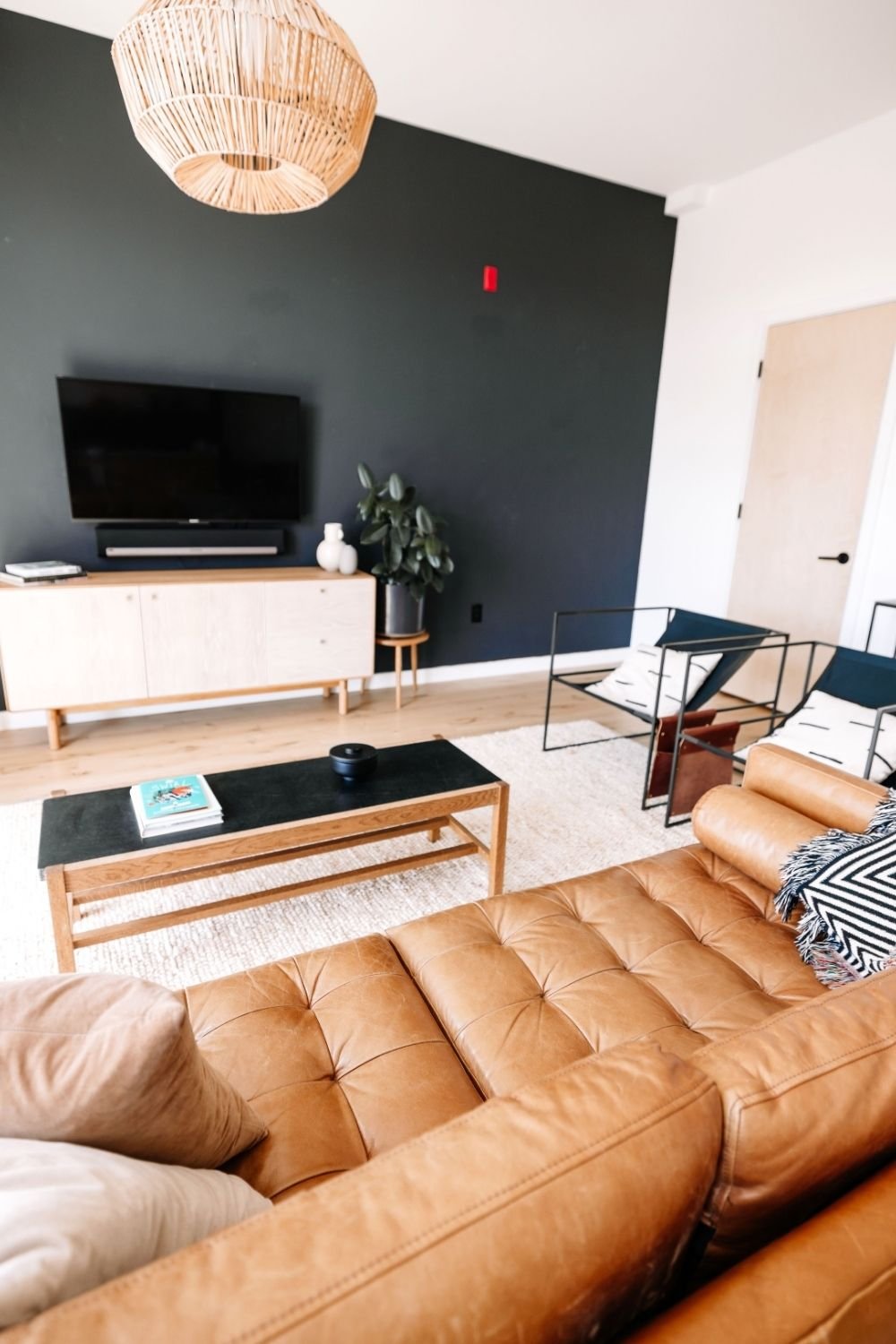
Photo by Andrea Davis on Pexels
A black TV wall is one of the easiest places to start. In the living room above, the TV and sound bar almost disappear into the black instead of being a big dark rectangle on a white wall. A pale wood media console, a rubber plant, white vases, a rattan pendant and a tan leather sofa keep the room light and warm. The other walls and the ceiling stay white, the floor is pale wood, and the rug is cream, so the black reads as a choice rather than a cave.
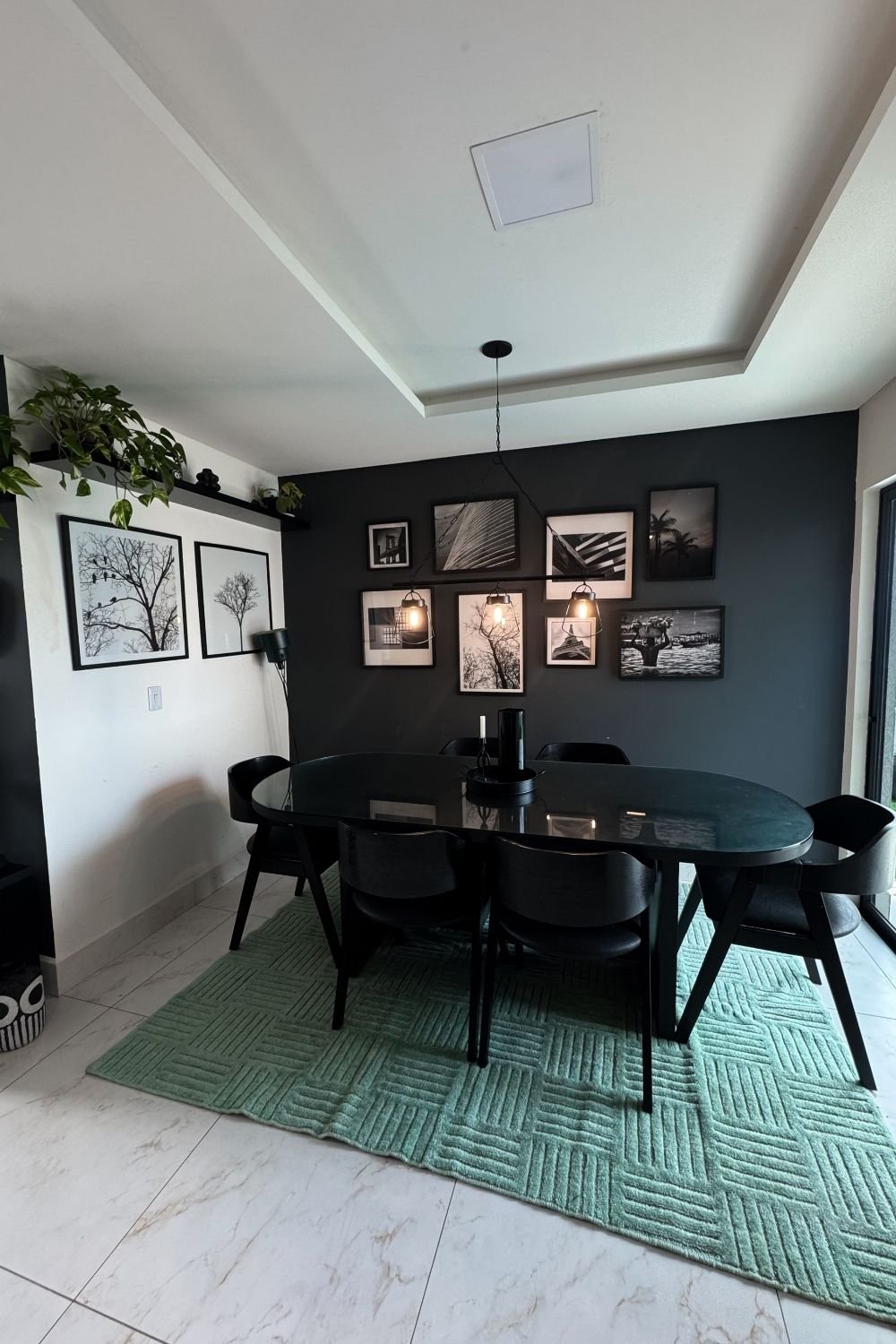
Photo by Fernanda Neitzel on Pexels
In a dining area, the black wall makes a great gallery wall. Here, a grid of black-and-white photos in black and white frames covers a charcoal wall behind an oval black table. A three-bulb cage pendant hangs low over the table, and a sage green textured rug keeps the floor from feeling heavy. The white side wall holds two more tree prints, so the two walls talk to each other without competing.
Fear #2: “It’ll look flat and cheap”
A flat, cheap-looking black wall is usually about the finish, not the color.
| Finish | Look | Best for | Watch out for |
|---|---|---|---|
| Matte / flat | Velvety, deep, hides flaws | Bedrooms, living rooms, low-traffic walls | Scuffs more easily; not ideal where hands touch |
| Eggshell | Soft glow, still dark | Most rooms, hallways, kids’ rooms | Shows wall bumps slightly more than matte |
| Satin | Noticeable sheen | Bathrooms, kitchens, trim | Highlights every dent and roller mark |
| Gloss | Mirror-like | Doors, cabinets, small details | Rarely right for a whole wall |
Matte gives you the “disappearing wall” effect best. If the wall gets bumped, eggshell is the practical compromise. A good-quality paint also matters more with black than with light colors: cheaper blacks often need three or four coats and can look patchy.
The other way to avoid a flat look is texture. Paneling, board and batten, wood slats or limewash all give a black feature wall shadows and depth.
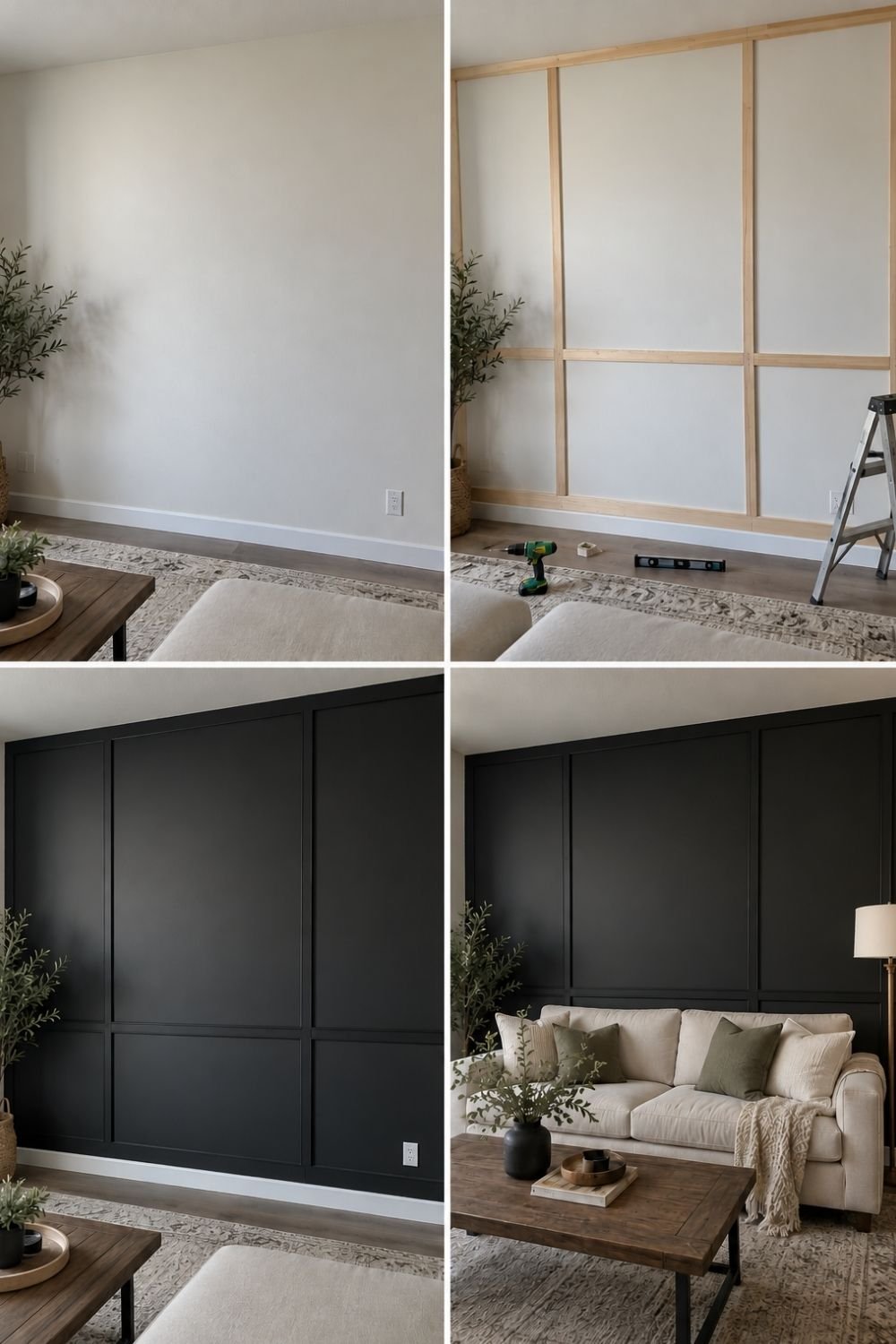
Photo by OurHoneyHome
The four frames above show a board-and-batten wall going up in a living room. First, a plain cream wall with a potted olive tree beside it. Then thin wood strips are fixed to the wall in a large grid, with a drill, level and ladder on the floor. The third frame shows the whole thing painted matte black, strips and wall together. In the last, a cream sofa with green and cream pillows, a knit throw, a rustic wood coffee table and a brass floor lamp finish the room. The grid breaks the black into panels, so it looks architectural instead of heavy. It’s also a weekend-sized DIY project.
Fear #3: “The room will be too dark”
It will be, if the only light source is one ceiling fixture. Black walls absorb light, so they need more of it and from more directions.
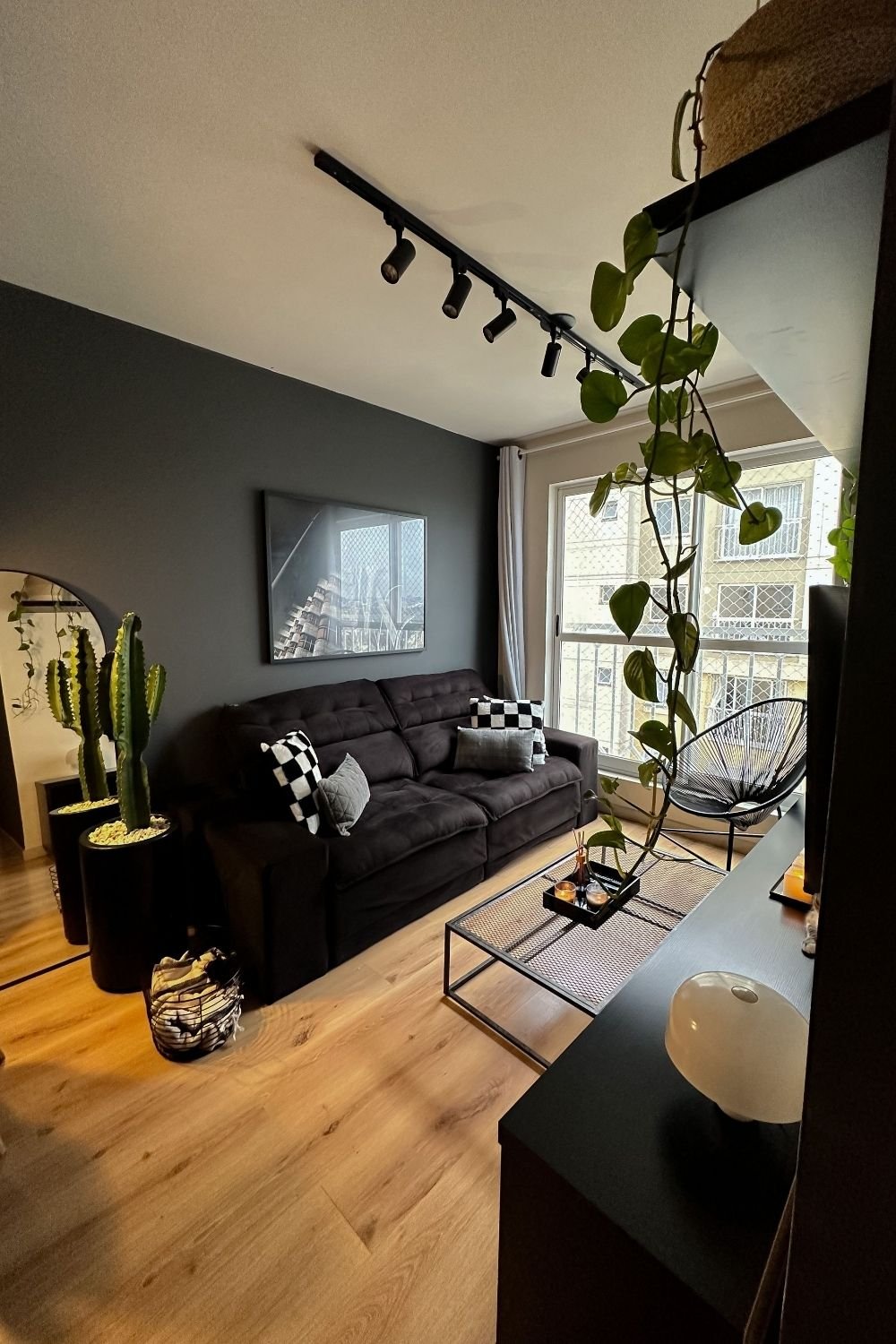
Photo by Fernanda Neitzel on Pexels
This small apartment living room has a charcoal wall behind a dark sofa, and it still feels bright. A black track light with several spots washes the wall and the framed print above the sofa. A big window floods the room with daylight. Warm wood floors, two tall cacti in black planters, a trailing pothos from a high shelf and checkered pillows add life and contrast. An arched mirror on the left bounces extra light back into the room.
What helps a dark wall at night:
- Three light sources, minimum: overhead, a floor lamp and a table lamp.
- Light the wall itself. Picture lights, wall sconces, track spots or an LED strip behind the TV make the black glow instead of swallowing the light.
- Warm bulbs (2700–3000K). Cool white light makes black look cold and gray.
- Mirrors and metallics. Brass, gold, glass and mirrors catch light and sparkle against black.
Fear #4: “Everything else will have to be black”
Not at all. The most successful black walls sit in rooms that are otherwise light and warm. Black is a very easy color to pair with other things; it just needs a counterweight.
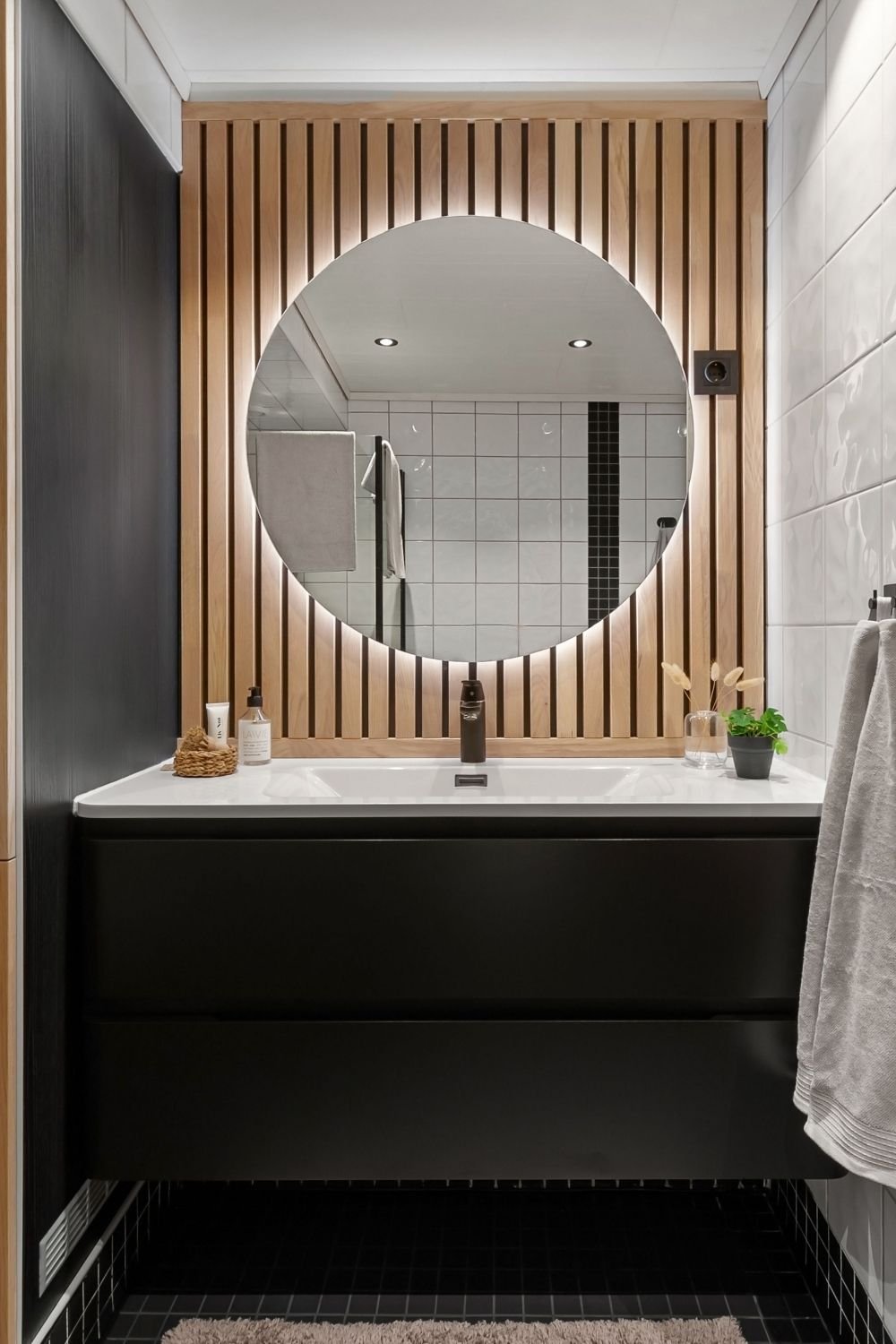
This small bathroom has black paneling on one side, a matte black floating vanity and black floor tiles, and yet it doesn’t feel dark at all. A section of pale oak slats behind the sink carries a large round backlit mirror, and the light glowing through the slats warms up everything around it. White wall tiles, a white basin, a pampas stem, a small plant and a soft gray towel finish it.
What pairs well with a black accent wall:
- Light or mid-tone wood (oak, ash, walnut) for warmth
- Brass and gold for glow
- Cognac leather for a relaxed, lived-in feel
- White and cream for crisp contrast
- Greenery, which looks especially vivid against black
- Textiles like linen, wool and velvet to soften all the hard edges
The bedroom: one wall behind the bed
The black bedroom wall behind the headboard is probably the most popular version, and for good reason. It frames the bed, makes the room calmer at night, and you don’t stare at it while you’re lying down.
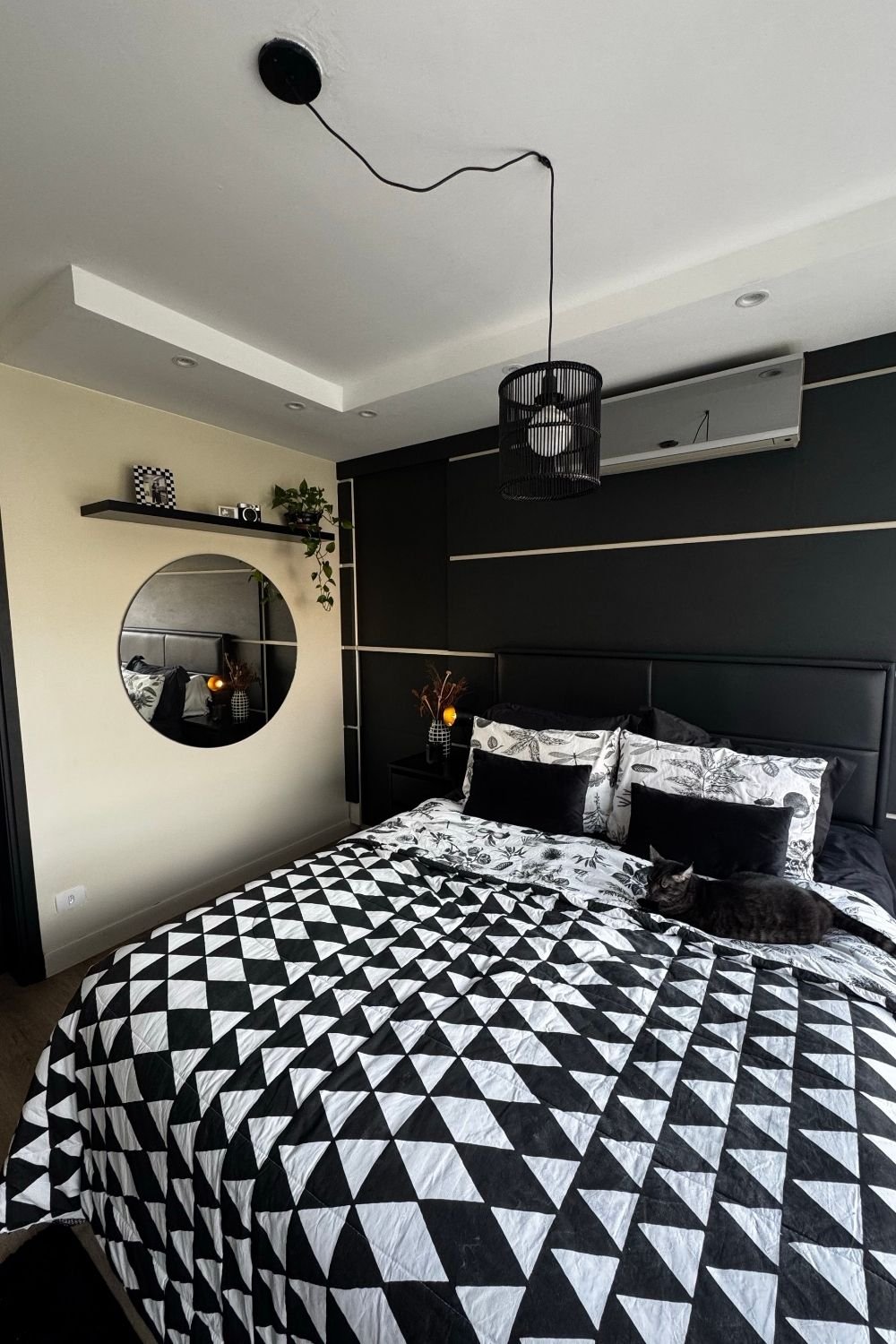
Photo by Fernanda Neitzel on Pexels
This bedroom goes graphic. The wall behind the bed is black with thin horizontal and vertical beige inlay strips, and a black upholstered headboard blends into it. A black-and-white triangle quilt, botanical-print pillows and black velvet cushions pick up the contrast. A black cage pendant, a round mirror and a slim floating shelf with a checkered photo frame and a pothos sit on the cream side wall. The overall look is bold, but the cream wall and white ceiling keep it balanced.
For a softer black feature wall in a bedroom, pair it with white or cream bedding, wood nightstands and warm lamps, like the before-and-after at the top of this post. The dreamy bedroom styles post has a darker, more romantic take on this too.
Small rooms and a wall that works all year
In a small room, a single black wall is often better than a light one, because it gives the eye a single strong point to settle on instead of four walls with lots of little things on them.
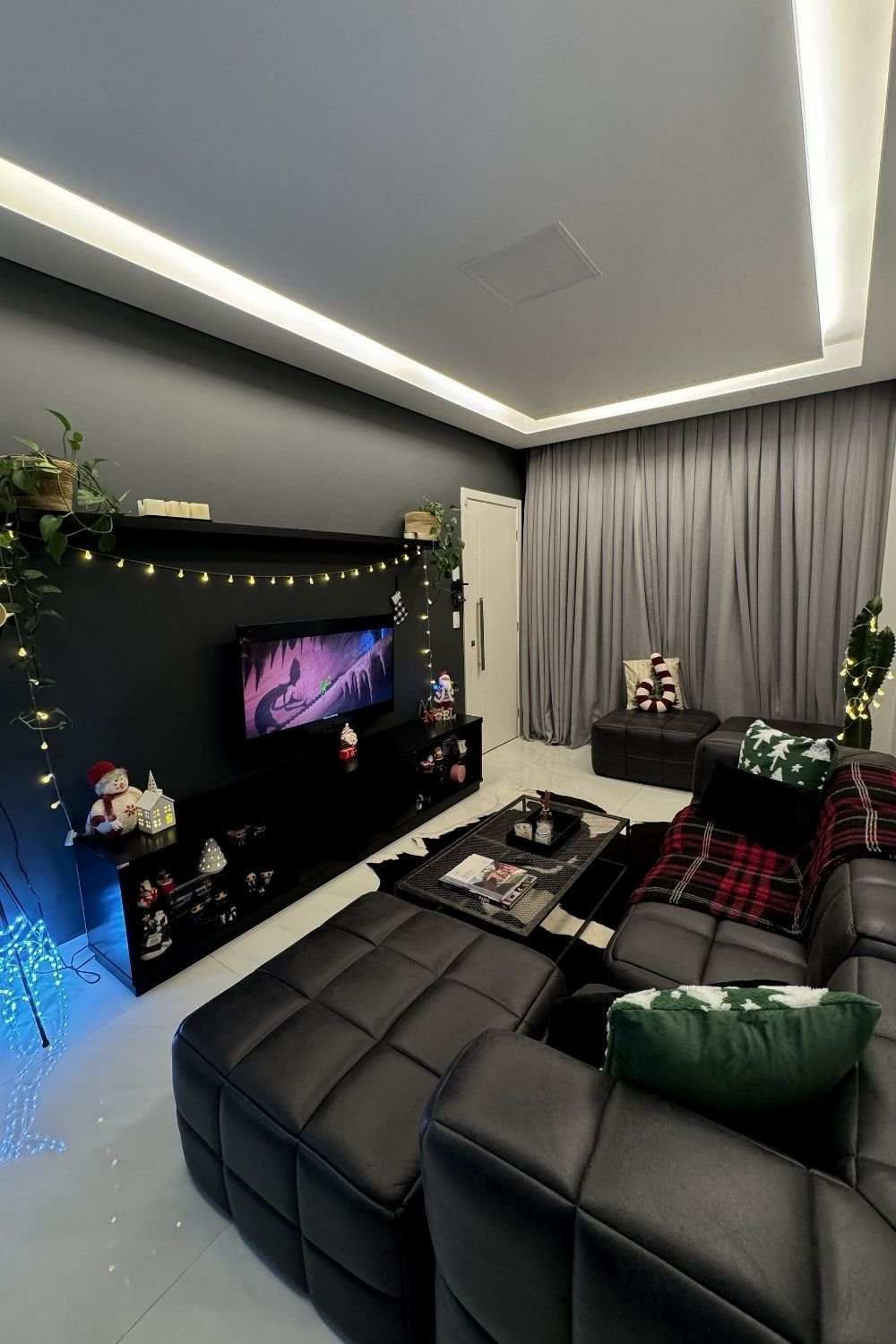
Photo by Fernanda Neitzel on Pexels
This compact living room shows another side of a black wall: it’s a great backdrop for seasonal decor. A charcoal wall holds a floating shelf and a long black media unit, dressed for the holidays with a string of warm globe lights, small figures, a lit ceramic house and plants. A cove light around the ceiling edge keeps the room bright, while gray curtains, a dark leather sectional and red plaid and green pillows complete the look. Twinkle lights look twice as good against black as against white, which is a nice bonus in December.
Other small-room tips:
- Keep the ceiling white or very light so the room keeps its height.
- Paint the trim and baseboard black too on that wall, so the wall reads as one clean plane.
- Don’t fill every inch. A black wall looks best with some empty space on it.
- Keep the sofa layout open. If you’re placing a sofa against the dark wall, the sofa layout guide helps you avoid blocking walkways.
Not quite ready for pure black?
True black isn’t the only option. These dark shades behave almost the same way and feel a little softer:
- Charcoal or off-black: the easiest step down. Many of the walls in the photos above are actually very dark charcoal, not pure black.
- Deep navy: reads as black at night and blue in daylight.
- Forest or bottle green: looks rich with wood and brass.
- Plum or aubergine: a moodier, warmer choice for bedrooms and dining rooms.
- Chocolate brown: warm and earthy, beautiful with cream.
If you like the idea of going dark but not on one sharp wall, a softer version of color drenching (painting walls, trim and sometimes the ceiling in one tone) is worth a look. The soft color drenching post goes into that.
Still on the fence? Try this first
Before you paint, live with it for a week. Buy a large sample board or a sheet of black poster paper, the bigger the better, and tape it to the wall you’re thinking about. Look at it in the morning, in the afternoon and at night with the lamps on. Put the sofa or bed in front of it and see what happens to the furniture.
If you keep glancing at it and liking it, paint. If it still bothers you after a week, try charcoal or deep green instead. And if it turns out you hate it after all, the upside of an accent wall is that it’s one wall and one afternoon to paint it back.
