Most plant people have the mug. It’s on the kitchen counter, it has a broken-off pothos stem in it, and it’s been there three weeks because throwing the stem away felt wasteful. The water has gone slightly cloudy. Nobody would call it decoration.
The odd thing is that the same cutting, in a clear glass bottle, lined up with four others on a shelf, looks deliberate. Nothing about the plant changed. What changed is that it got a frame and some rhythm, which is the whole idea behind propagation station ideas: cuttings displayed on purpose instead of parked on a surface.
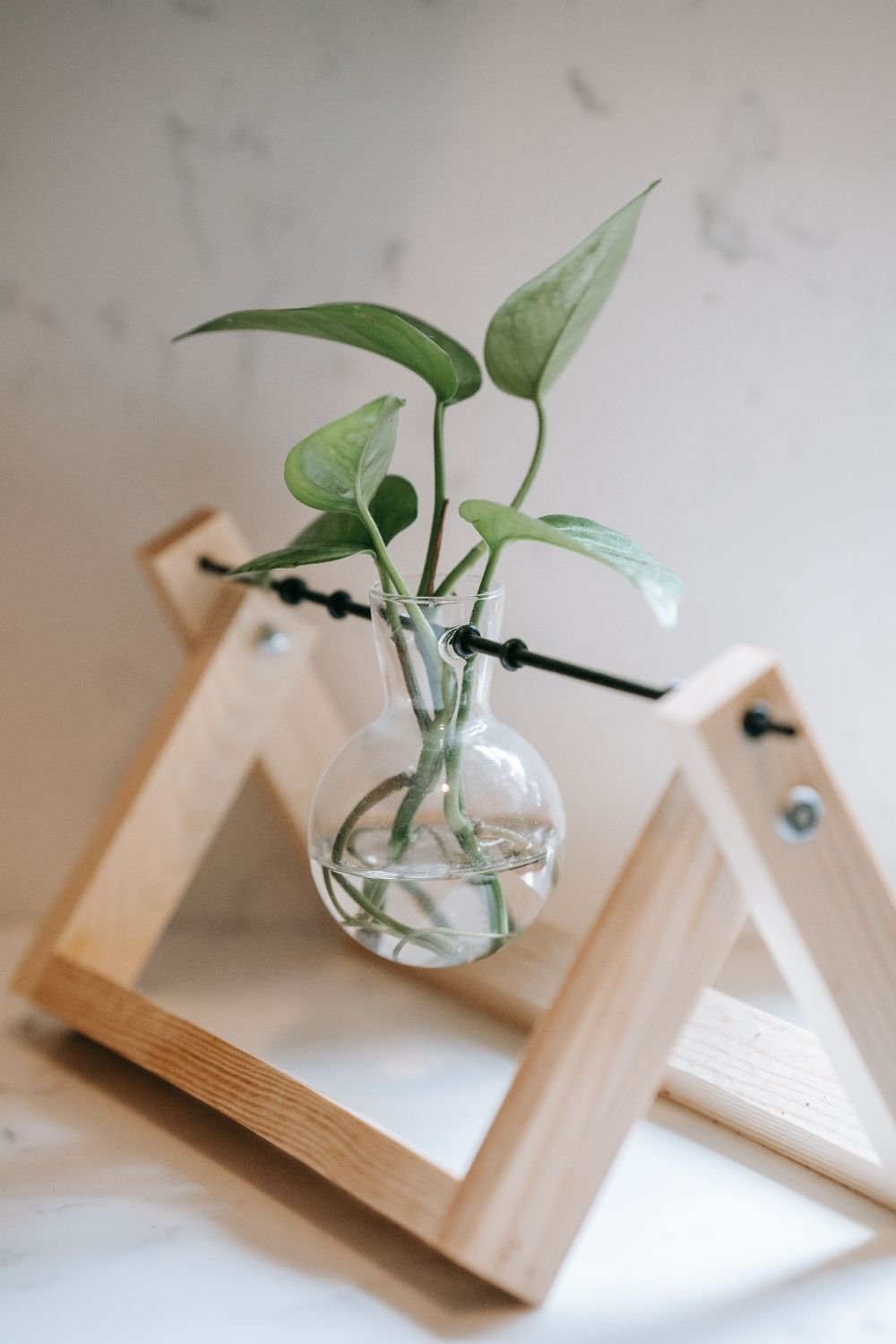
The simplest possible version is above: one round glass bulb vase suspended in a small A-frame wooden stand, holding a single pothos cutting with a few pale roots curling in the water. One stem, one vessel, one holder, and it reads as an object rather than as leftovers.
What makes cuttings look decorative
Three things, mostly, and none of them are about the plants. Clear glass, so the roots are the point rather than something to hide. Repetition, meaning several vessels in a row or a grid instead of one on every surface in the house. And a base or a holder of some kind, whether that’s a wooden rack, a tray or a shelf, because an edge turns a collection into an arrangement.
Beyond that, I’d keep the cuttings themselves to two or three species. A row of pothos, philodendron and tradescantia in matching jars looks like a display. Eleven different plants in eleven different containers looks like a windowsill that lost a fight.
Start on a windowsill
The easiest place to begin is a bright sill, ideally one with indirect light rather than hours of direct sun, which heats the water and encourages algae.
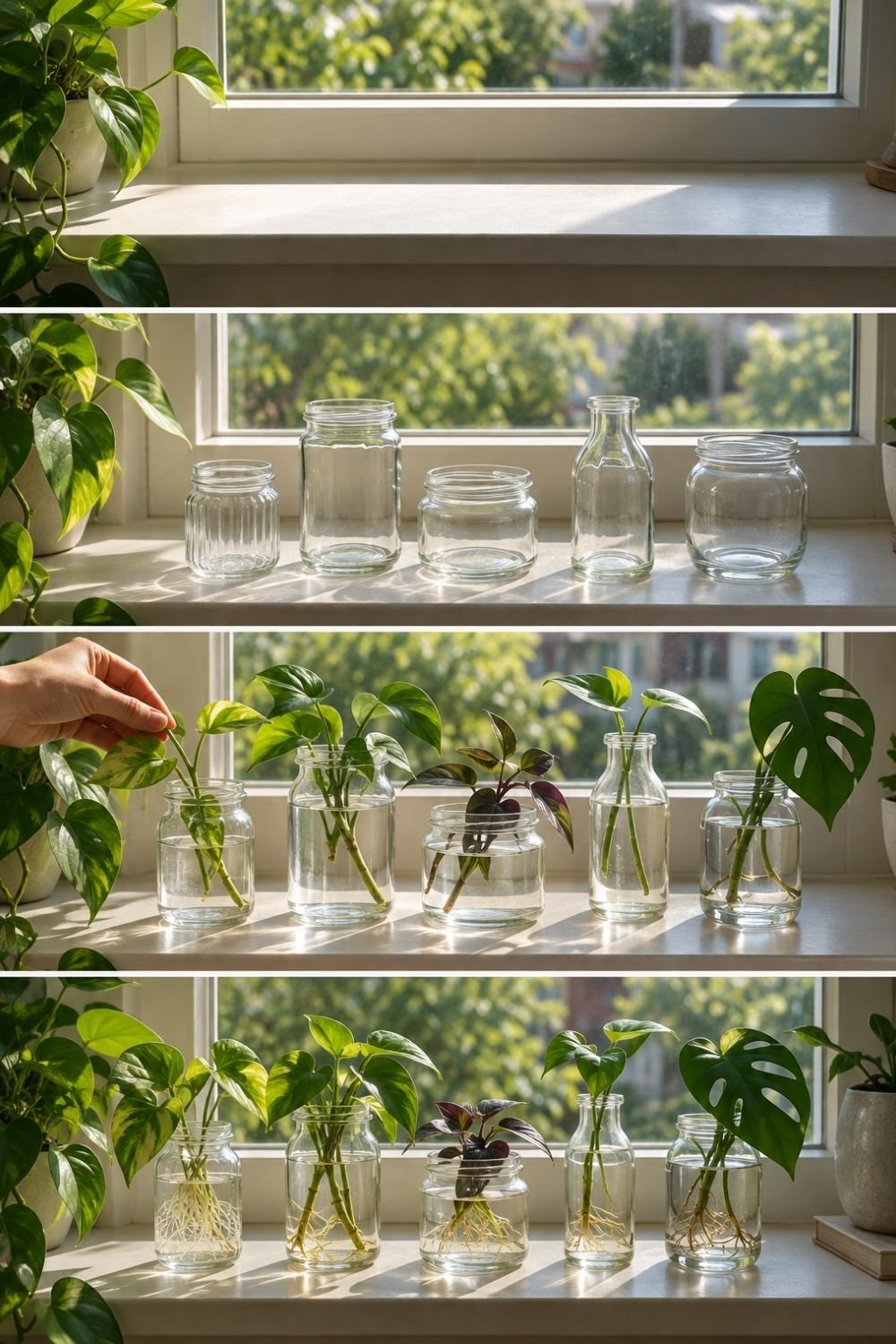
Photo by OurHoneyHome
The four frames above take a bare windowsill through the whole process: empty stone sill, then five clear glass jars and bottles of different shapes lined up on it, then cuttings of pothos, tradescantia and monstera going in, and finally the same jars with thick white root systems visible through the glass. It took a few weeks, and the sill is now the nicest thing in the kitchen.
Mixed vessel shapes work here because the glass is all clear and the heights are similar. That’s the balance I’d aim for: vary the silhouettes, keep the material and the scale consistent.
Water, and the part people get wrong
Change the water weekly, or whenever it starts to look anything other than clear. Cuttings rot in stagnant water faster than they root in it, and cloudy water is the first sign.
Cut just below a node, strip off any leaf that would sit under the waterline, and leave the top leaves well clear of the surface. Room temperature water is fine, and so is tap water in most places if it sits out for an hour first. Roots usually appear within two to four weeks for pothos and philodendron, longer for woodier stems.
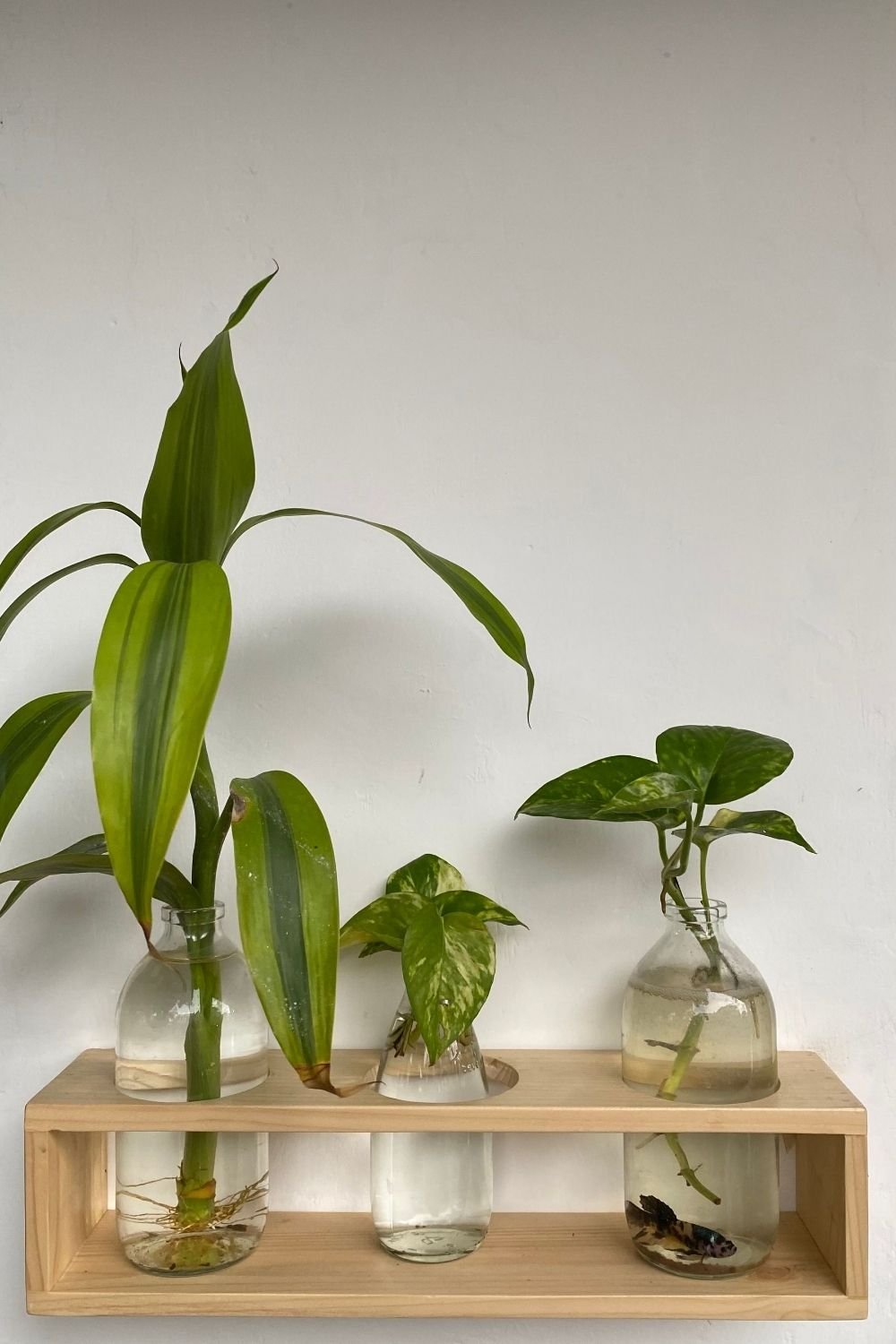
Photo by syarif moh on Pexels
The shelf above shows a nice mix: a lucky bamboo stem, a dracaena leaf and two pothos cuttings in clear bottles on a simple pine shelf, with more jars in the slot underneath. One of the lower jars also has a betta fish in it, which is a look you see online a lot. I’d keep the two separate, since fish need more water volume and stable conditions than a rooting jar provides, and you can’t change cutting water freely with a fish in the glass.
A small stand for one or two cuttings
You don’t need a whole system. One or two vessels in the right spot often look better than a wall of them, especially in a room that’s already busy.
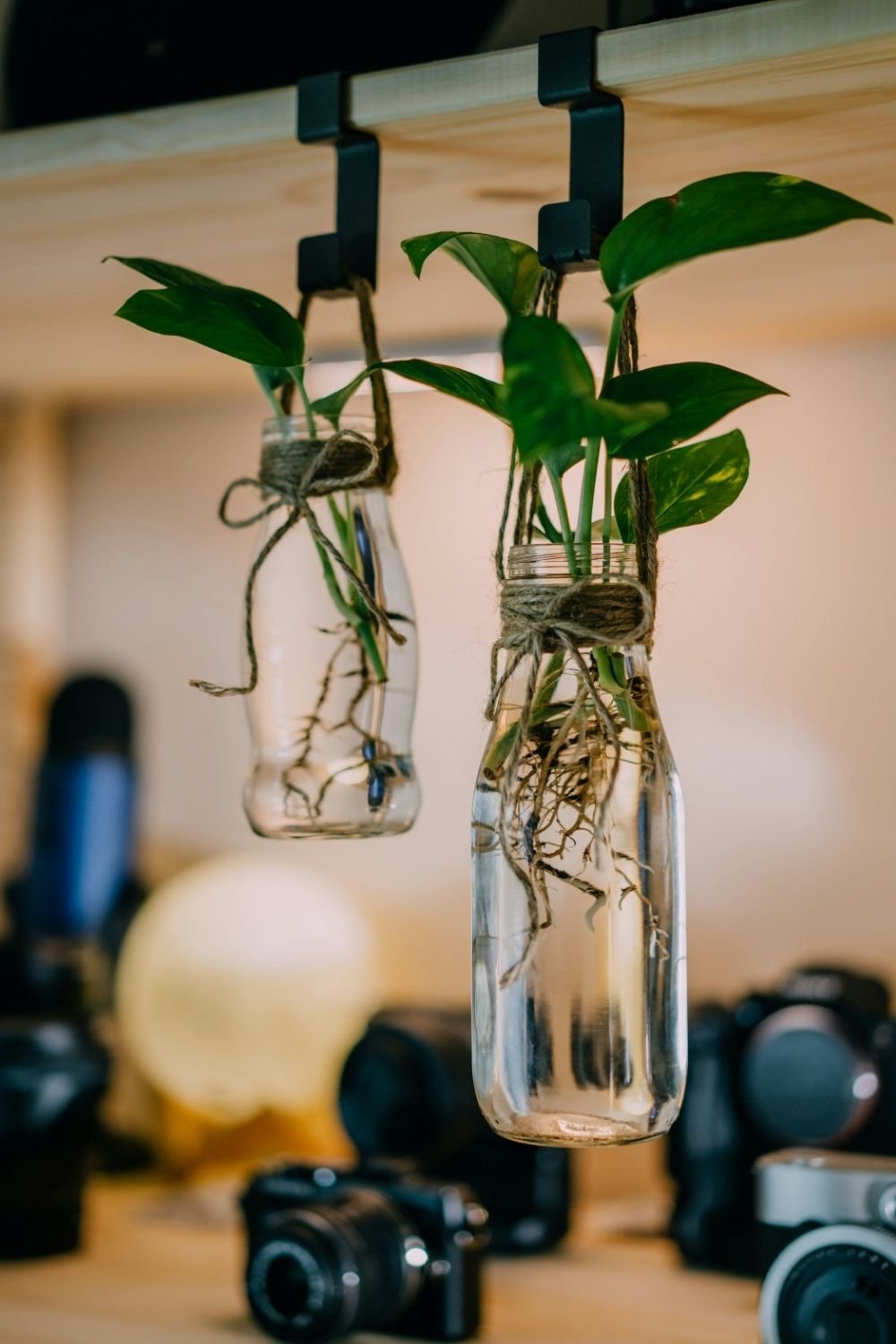
Photo by Nick Quan on Unsplash
This one hangs two small glass bottles from the edge of a pale wood shelf on black S-hooks, each tied with twine, with pothos cuttings trailing roots down into the water. The shelf below holds cameras, so the plants are decorating a working space rather than a plant corner. Hanging vessels like this are worth remembering when every flat surface is already taken.
Test tubes and hanging racks
Test tubes are the neatest option for single stems, and they take up almost no room.
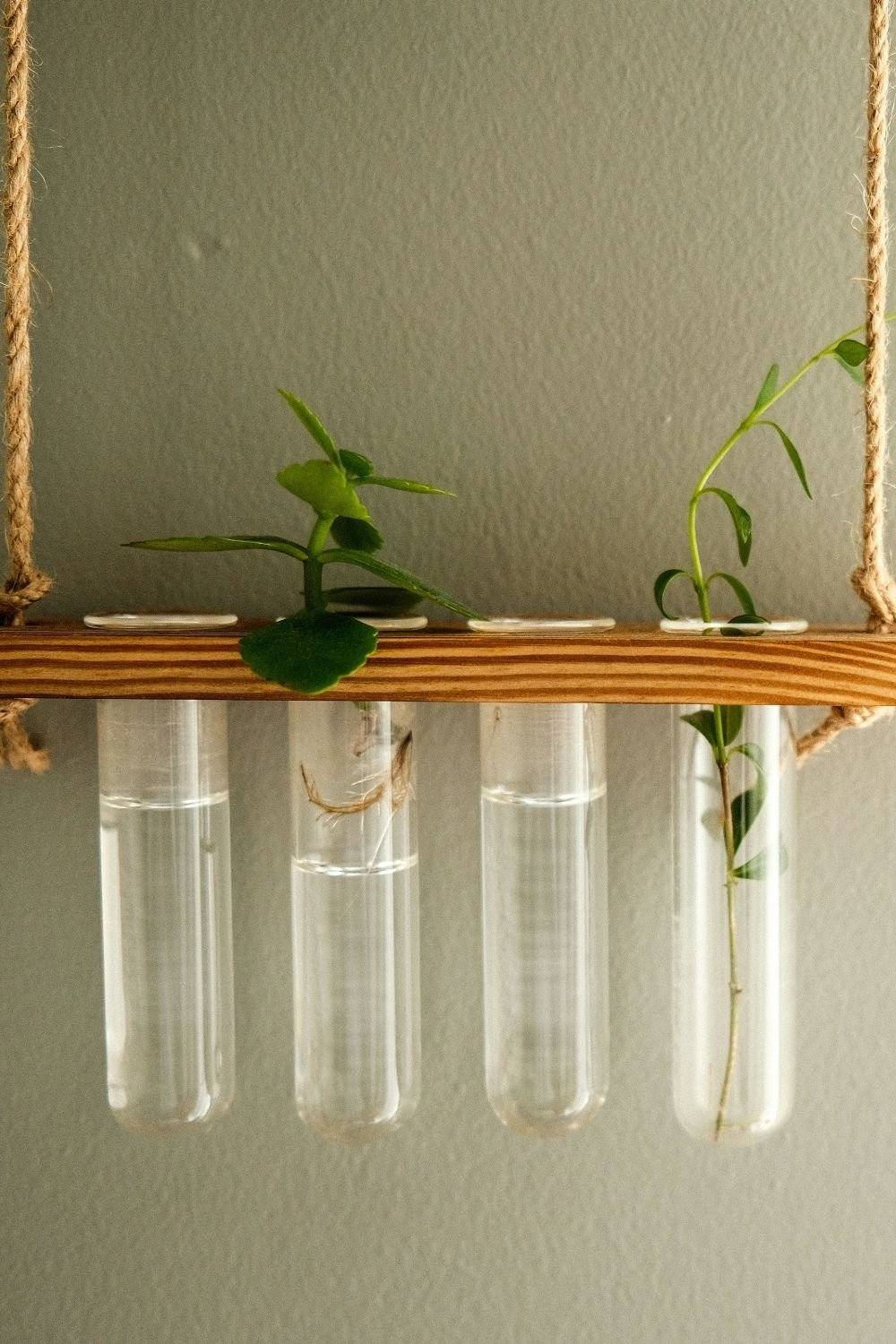
Photo by Cameron Arksey on Unsplash
Above, a narrow wood bar with four holes drilled through it hangs on two lengths of rope against a sage wall, with four glass test tubes slotted into the holes and a couple of small cuttings already rooting. The catch with tubes is volume: they hold so little water that it evaporates and fouls quickly, so they need topping up every few days and emptying weekly. They suit small, soft cuttings rather than a thick monstera stem.
Going up the wall
Once you have more than five or six cuttings, the wall is the obvious place, and this is where a plant propagation wall stops looking like an experiment and starts looking like art.
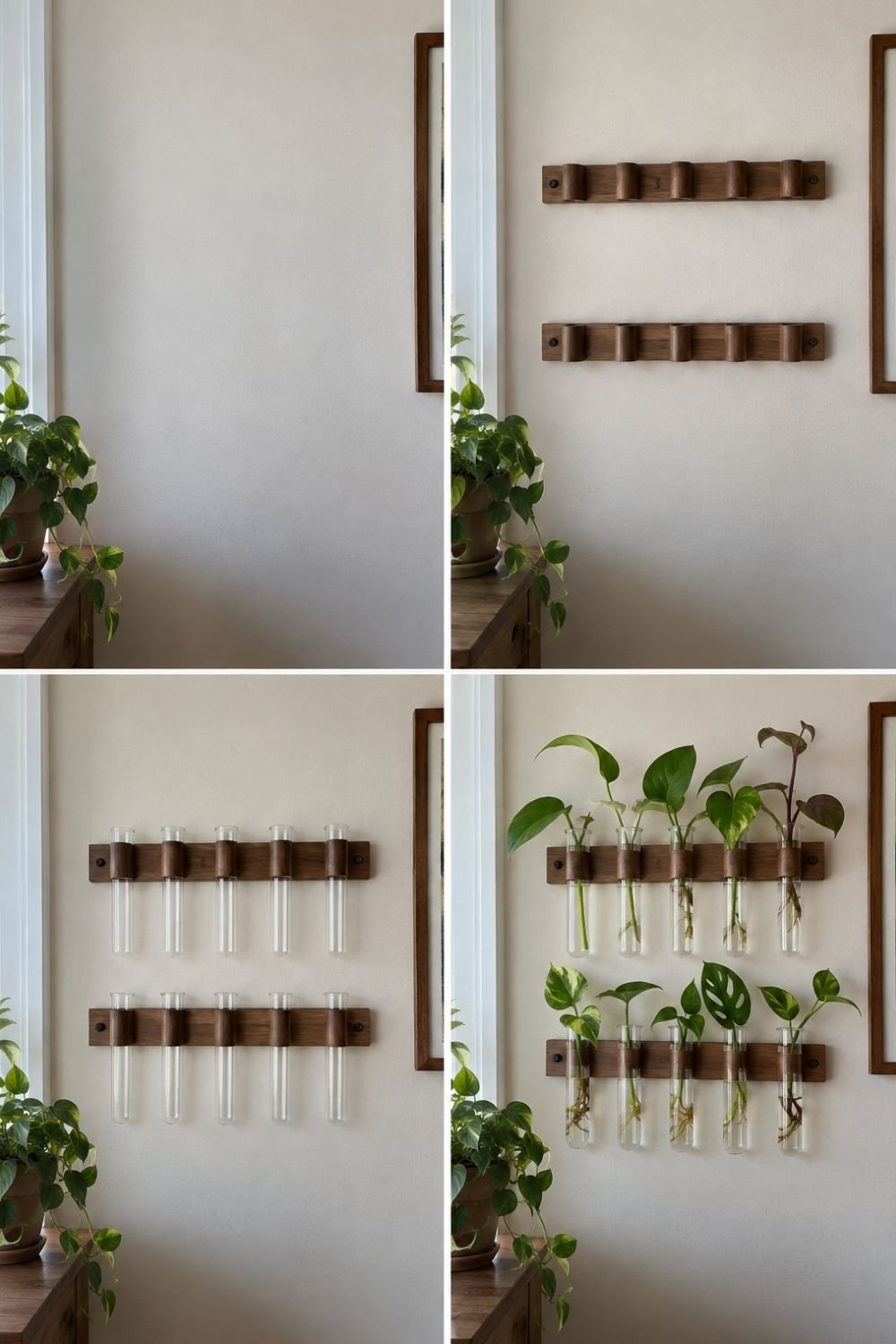
Photo by OurHoneyHome
The four frames above show the build: a blank cream wall beside a mirror, then two dark walnut rails with scalloped cut-outs screwed to the wall one above the other, then ten glass test tubes dropped into the cut-outs, and finally the finished wall with pothos, philodendron and a small monstera cutting in each tube, roots visible along the whole row.
Two rails at slightly different lengths look better than two identical ones, and hanging them about 25 to 30 cm apart leaves room for the leaves to grow without touching the rail above.
The renter-friendly version
None of this needs drilling.
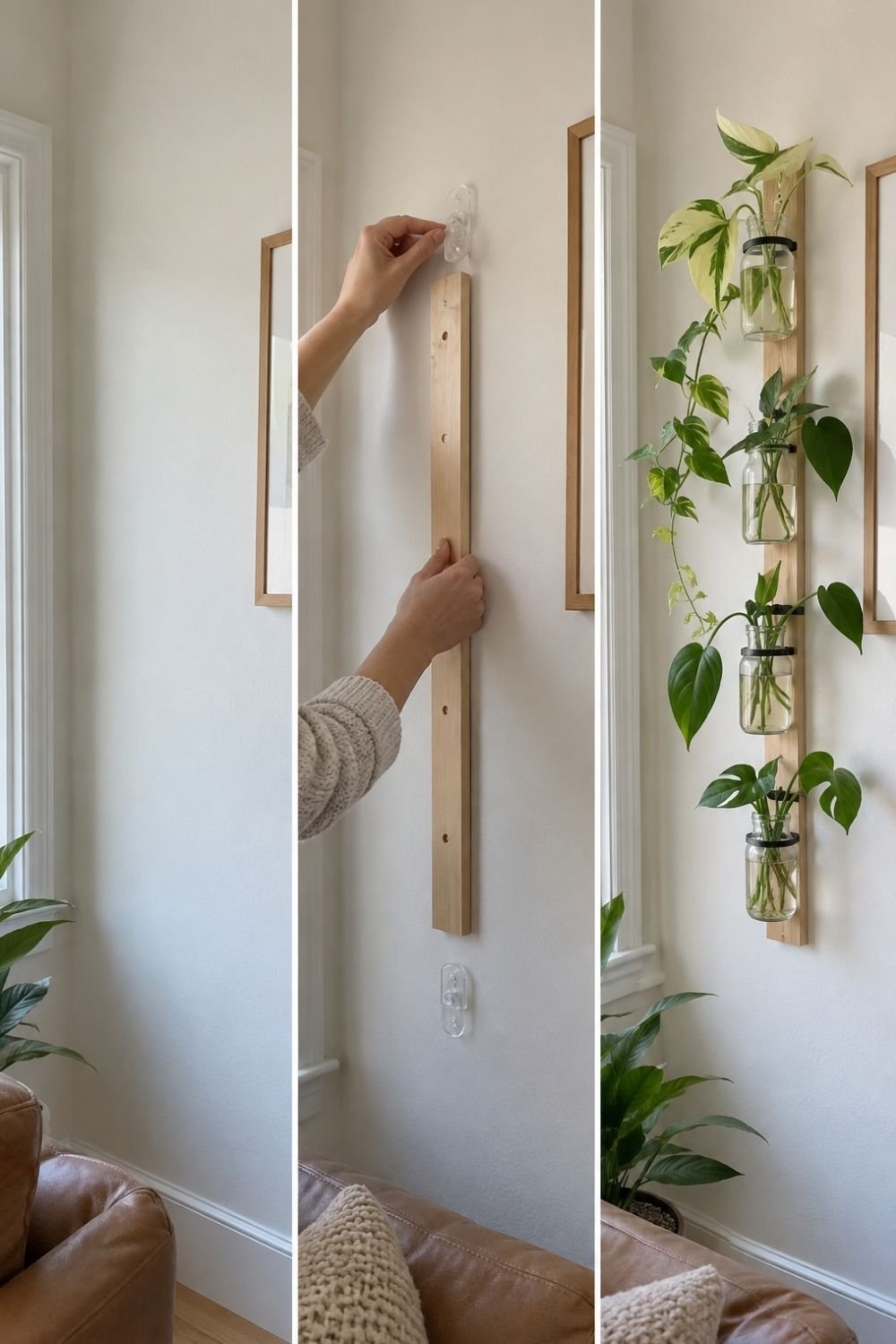
Photo by OurHoneyHome
The three frames here show a single vertical pine batten going up on removable adhesive hooks, top and bottom, and then four glass jars clipped onto it in a column, each holding a pothos or philodendron cutting with long trailing vines. It’s about 15 cm wide on the wall, it comes down without a mark, and it fills an awkward narrow strip that nothing else would fit.
Keeping a collection tidy
The difference between a plant station and a mess is usually a tray.
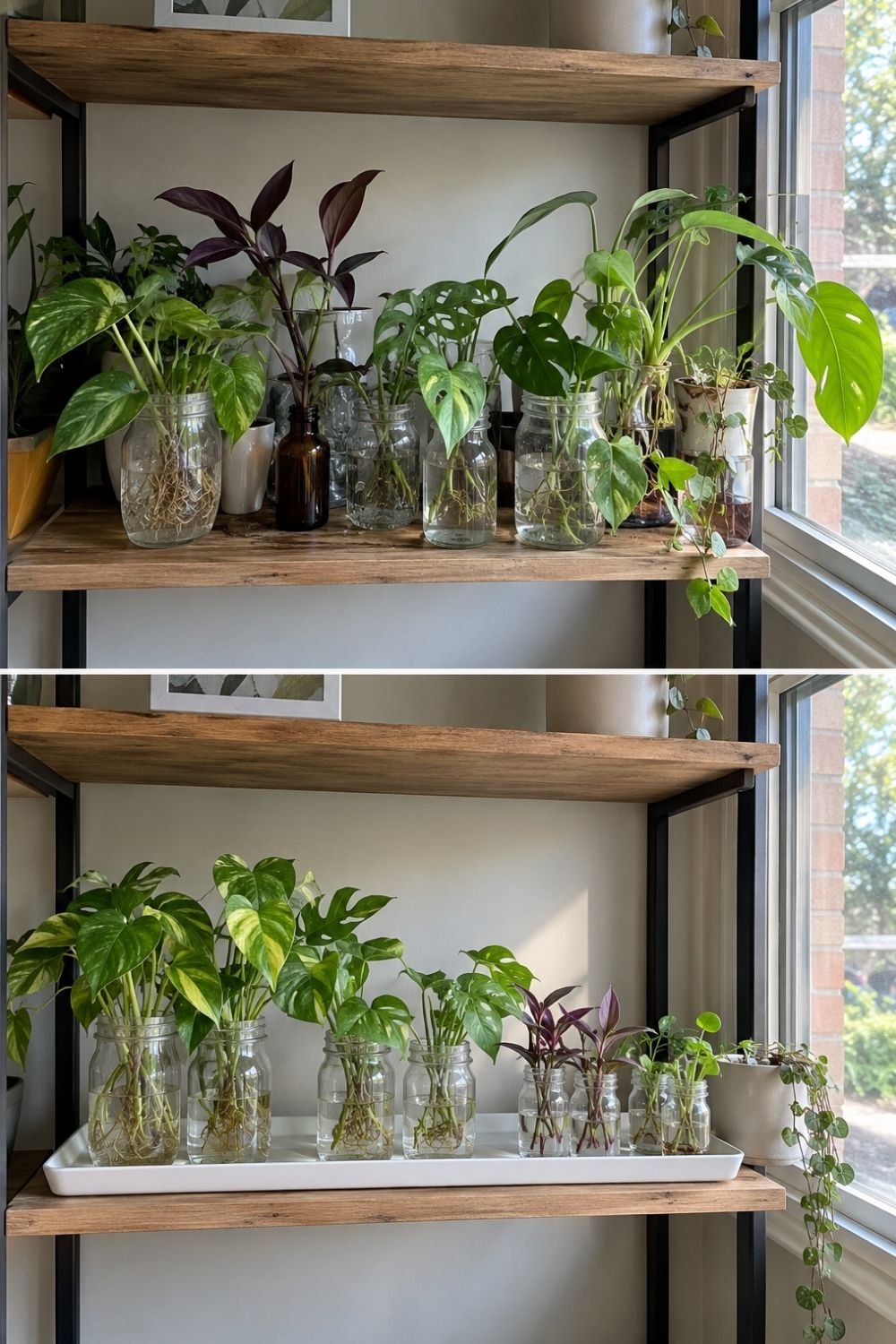
Photo by OurHoneyHome
The two frames above show one shelf before and after. In the first, a dozen mismatched containers crowd together: mason jars, a brown apothecary bottle, a white vase, a few odd glasses, all at different heights. In the second, the same cuttings sit in similar jars, graded by height, lined up on a white ceramic tray. The plants are identical. The tray and the sorting did all of it.
A tray also catches drips when you top up the water, which matters on wood shelves. And if you label anything, small tags tied to the neck of each jar look far better than tape on the glass.
One more thing that helps: give the collection a single home rather than letting it spread. Plant shelf ideas fall apart the moment jars start migrating onto the windowsill, the desk and the bathroom cabinet, because scattered glassware always reads as clutter, however pretty each one is on its own. One shelf, one sill or one wall rail, and the rest of the rooms stay clear.
What happens once they root
At some point the roots reach five centimetres or so, and you have a decision: pot it up, or leave it in water. Potting is the usual advice, and water-rooted cuttings do best if they’re moved while the roots are still young, since long water roots struggle to adapt to soil.
But leaving them is a perfectly good option too. Pothos, tradescantia, lucky bamboo and monstera will live in water for years if you change it regularly and drop in a little diluted liquid feed every few weeks. That’s really what turns a propagation station from a nursery into decor: the display isn’t a stage on the way to somewhere else, it’s the finished thing. If you like the idea of plants as permanent decoration in other forms, the pressed flower post takes it in the opposite direction, and the countertop styling post explains why the tray trick works on any surface.
