Fall decor doesn’t have to go up in one weekend in a flurry of pumpkins. The fall decorating ideas that look best (and cost least) are the ones you build in layers: a few warm touches in early September, the mantel and entryway in October, and the dining table in November, right through Thanksgiving. Most pieces stay out the whole time; you only add to them.
Below is that plan, room by room, followed by a few palettes to choose from and a checklist.
Start small in early fall
In early September it’s still warm outside, and a porch full of pumpkins looks a bit premature. This is the time for small changes indoors:
- Swap the textiles. Trade linen pillow covers for wool, velvet or bouclé in rust, mustard, olive or cream, and leave a knitted throw on the sofa.
- Bring in branches. Two or three stems of faux maple leaves or berry branches in a vase you already own.
- Make one small vignette. A tray, a cake stand or a tiered stand with a few pieces on it, rather than decor scattered across every surface.
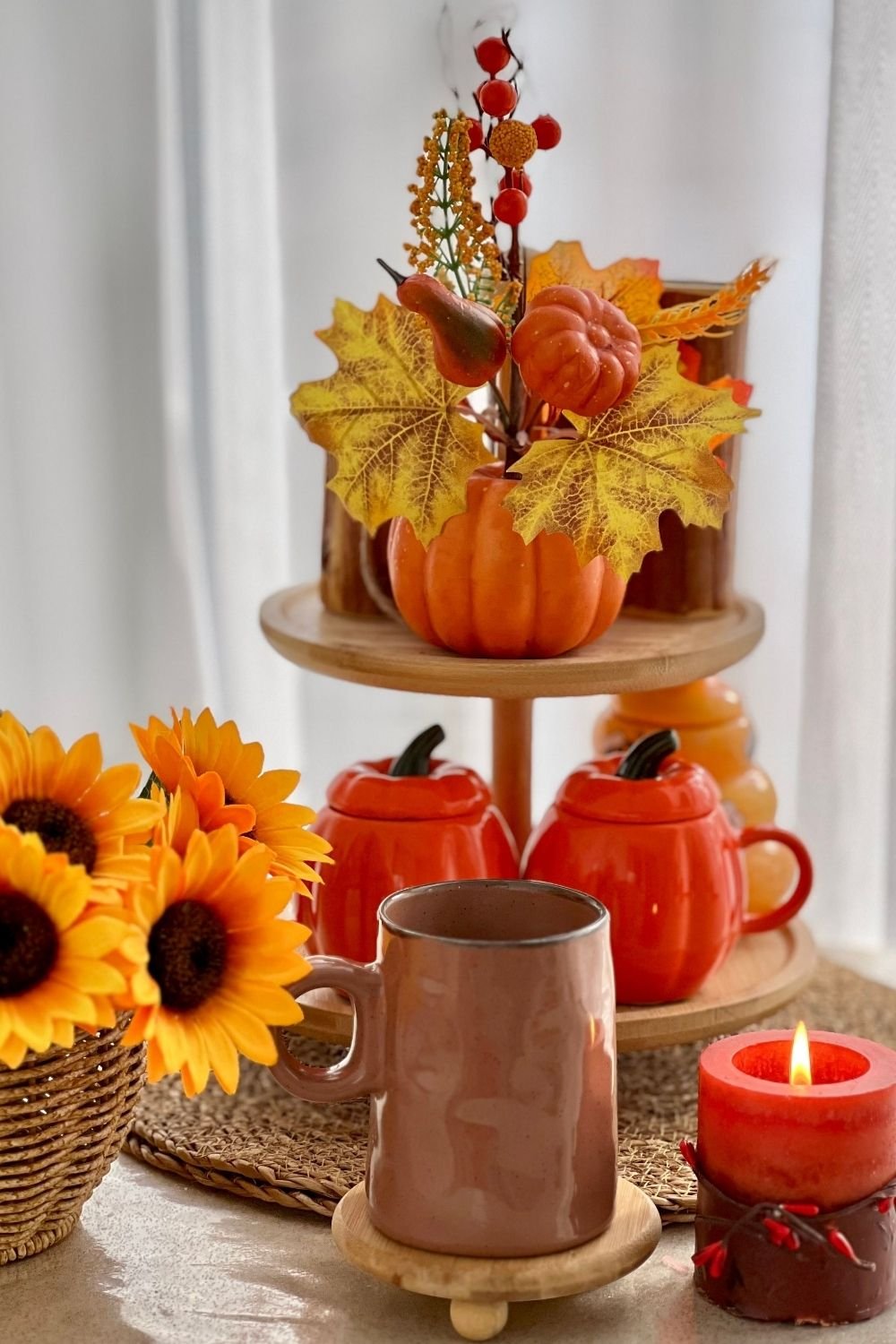
This two-tier wooden stand is a good example of how much a small vignette can hold: a ceramic pumpkin with maple leaves and berry stems on top, two pumpkin-shaped lidded mugs below, and a red pillar candle, a speckled mug and a basket of sunflowers around it on a seagrass placemat. It sits in one spot, so it’s easy to put together and easy to put away.
Sunflowers are a good bridge between late summer and fall. They look right in September, when mini pumpkins still feel a little early.
Build the mantel in layers
The mantel is where fall decorating ideas get the most attention, and also where it’s easiest to overdo it. Building it in steps keeps it from looking cluttered.
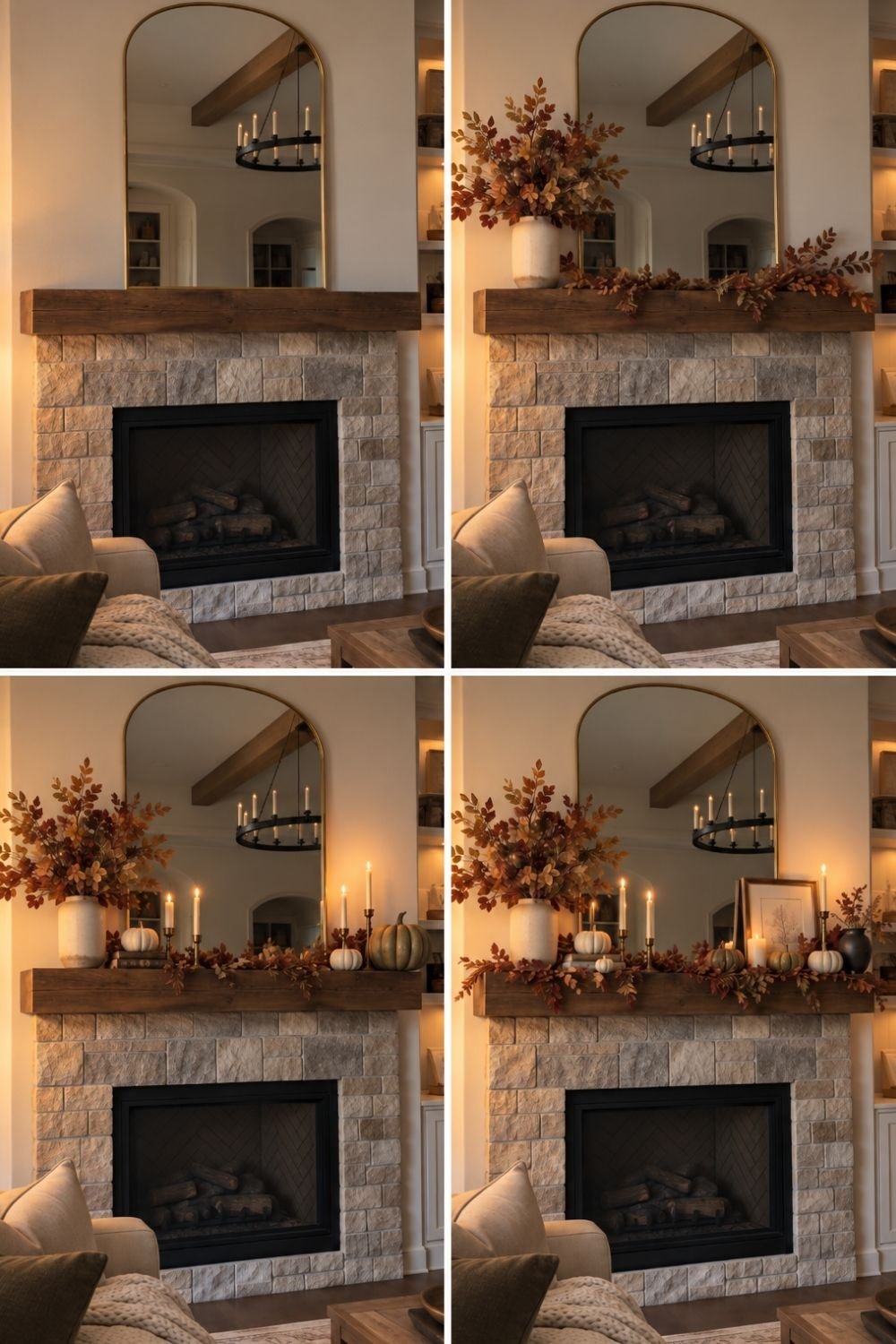
Photo by OurHoneyHome
The four frames above show the order that works on most mantels:
- Start with height on one side. A tall vase of rust-colored branches to the left of the mirror balances the arched brass frame.
- Add a garland. Loose leafy stems along the front edge, trailing off one end, soften the straight line of the wood beam.
- Add candles and pumpkins. Taper candles in brass holders at different heights, plus a few small pumpkins in white and sage, grouped rather than spaced evenly.
- Finish with one flat piece. A small framed print leaning against the mirror, plus a dark vase, fills the gap without adding more pumpkins.
If your mantel has a TV above it instead of a mirror, keep everything low so the decor doesn’t block the screen, and let the garland do most of the work.
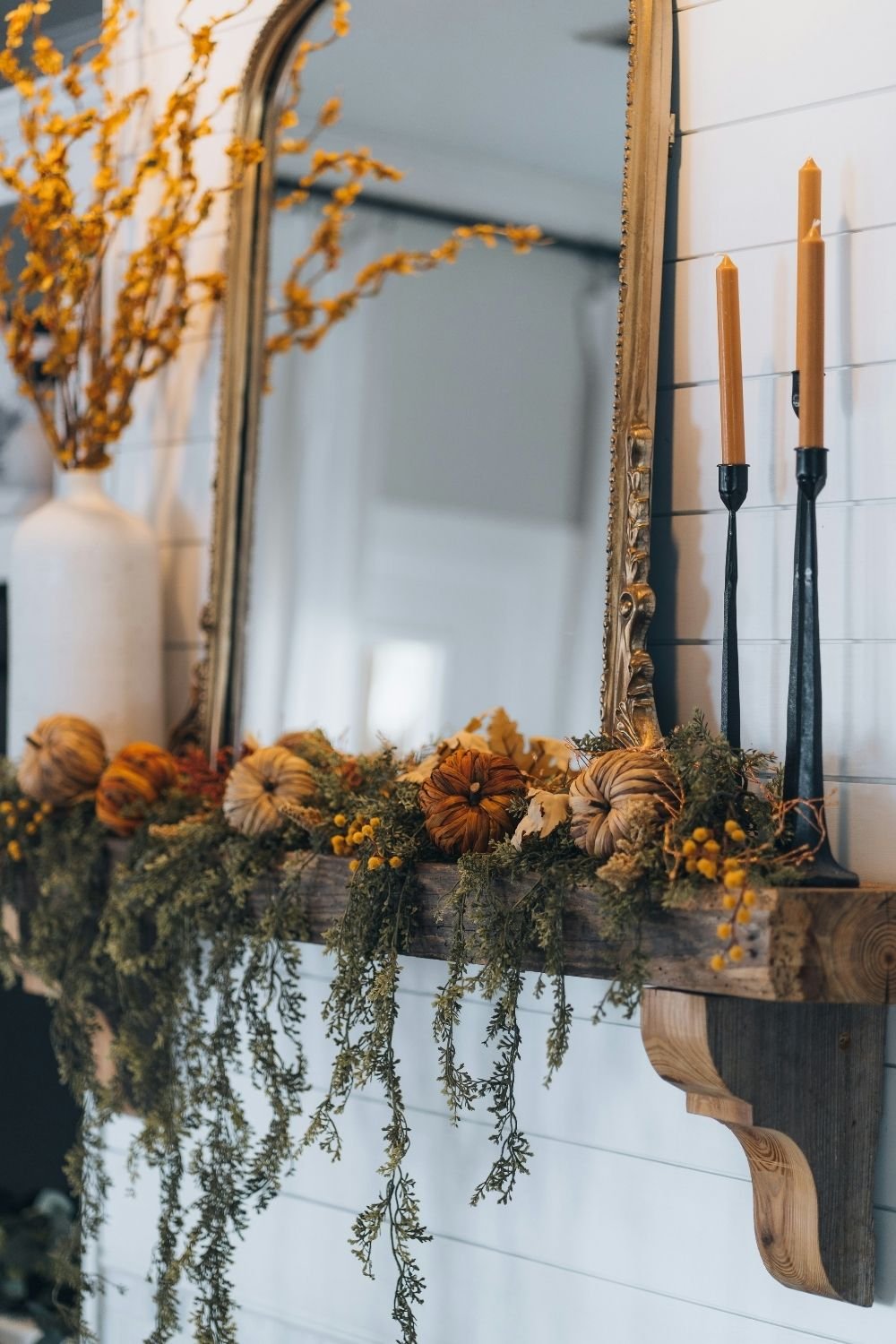
Photo by Ronnie George on Unsplash
This mantel takes a different route. Instead of orange and rust, it uses a trailing green garland, woven and dried-look pumpkins in tan and rust, and mustard taper candles in black iron holders. The gilded mirror and the rustic beam do the rest. It’s a good option if bright orange pumpkins aren’t your thing.
Make the entryway the first thing people see
An entry console gets seen every time someone walks in, so a little decor goes a long way here. It also works for people who don’t have a mantel at all.
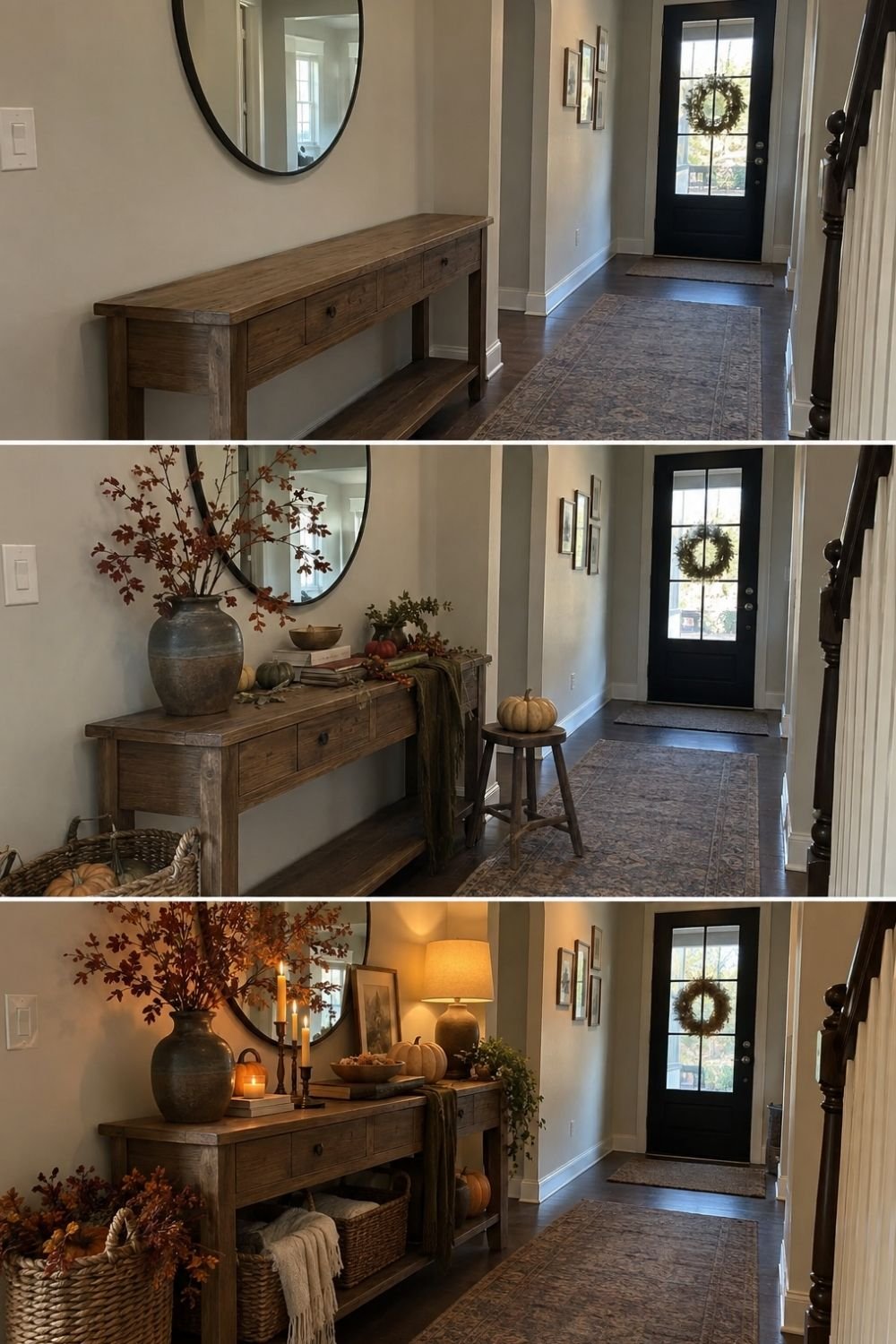
Photo by OurHoneyHome
The same console goes from bare to finished in three steps. First, a large stoneware vase with rust branches, a stack of books, a few small pumpkins and an olive throw draped over one end, plus a wooden stool beside it with one white pumpkin. Then a table lamp, taper candles, a framed picture, a wooden bowl and baskets on the lower shelf. The wreath on the front door stays the same in all three.
That last point is worth copying: a simple wreath of dried leaves or grapevine can go up in September and stay until the end of November. It doesn’t need a holiday theme to work.
A lamp matters more in the entryway than any pumpkin. In October it’s dark by dinnertime, and a lit console with a warm bulb makes the whole hallway look ready for the season.
Keep the porch simple
A porch doesn’t need a full display. Two big pumpkins by the door already say “fall,” and anything else is a bonus.
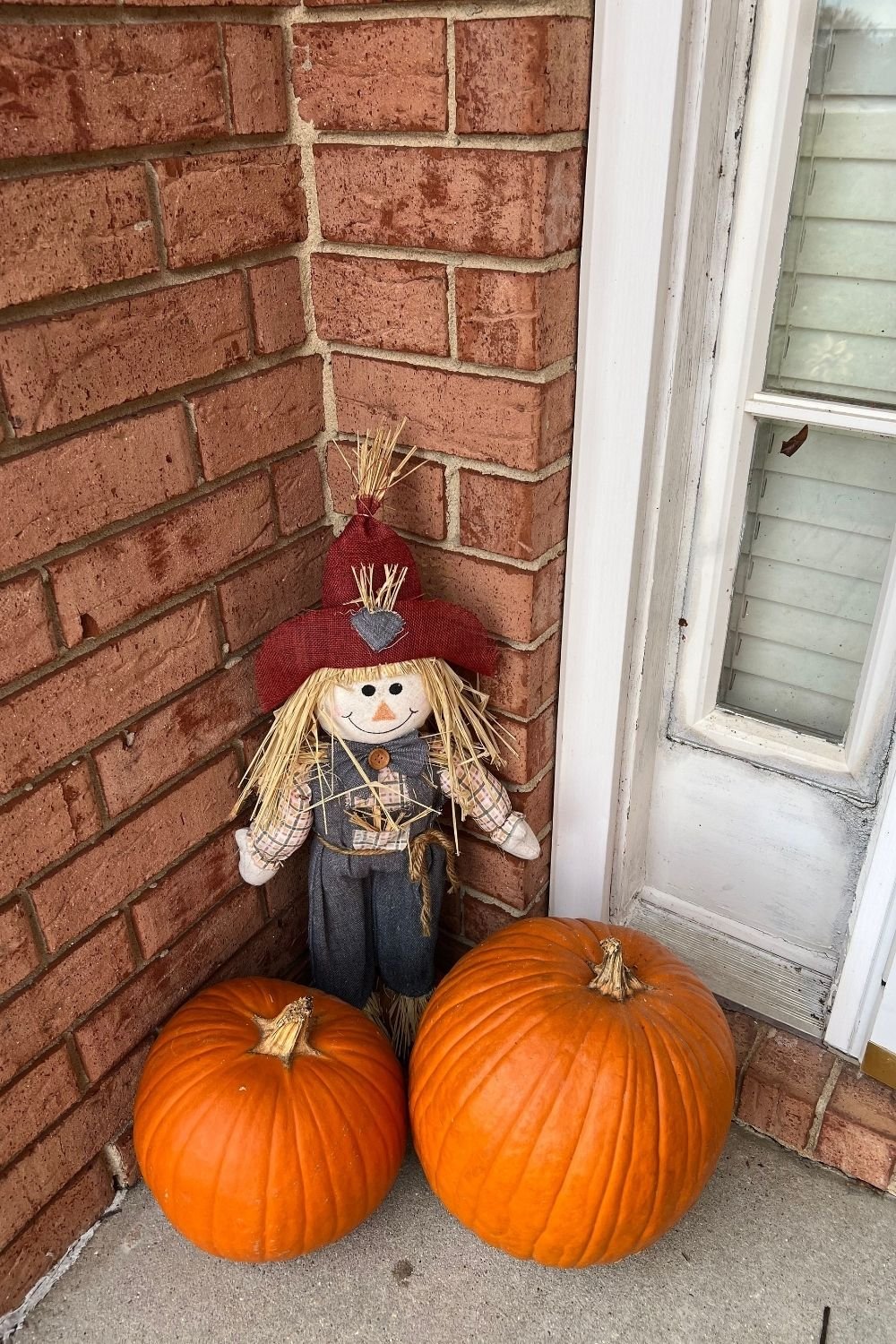
Photo by Kathleen Trigg on Pexels
Two orange pumpkins and a fabric scarecrow in the corner by the door: that’s the whole display, and it reads from the street. If you want more, add height behind the pumpkins (a bale of straw, a tall planter with ornamental grass or mums) rather than more small things, which get lost outdoors.
Fresh or faux? Both have a place:
- Fresh pumpkins look best and cost little at a farm stand. Uncut, they usually last for weeks in cool, dry weather. Keep them off wet concrete (a doormat or a wooden crate under them helps), and bring them in if a hard frost is on the way.
- Carved pumpkins soften within days, faster in warm weather. If you carve for Halloween, do it close to the day, and keep the uncut ones for the rest of the season. The DIY Halloween decorations post has ideas for the week the porch goes a bit spookier.
- Faux pumpkins cost more up front but last for years. They work best indoors and in covered spots, where nobody gets close enough to knock on them.
Bring it into the kitchen
Kitchen fall decorating ideas work best when they stay small. The kitchen doesn’t need pumpkins on every counter; one or two touches are enough:
- a wooden bowl of apples and mini pumpkins by the window;
- a vase of branches or dried wheat on an open shelf, well away from the stove;
- a jar of cinnamon sticks, or a tea towel and oven mitt in plaid or rust.
Counter space is usually the problem, so keep fall decor to the spots you don’t cook on. The countertop styling post covers how to keep counters decorated without making them harder to use.
Carry the table through to Thanksgiving
The dining table is where the fall decor can grow slowly, from a simple centerpiece in October to a full table setting in late November.
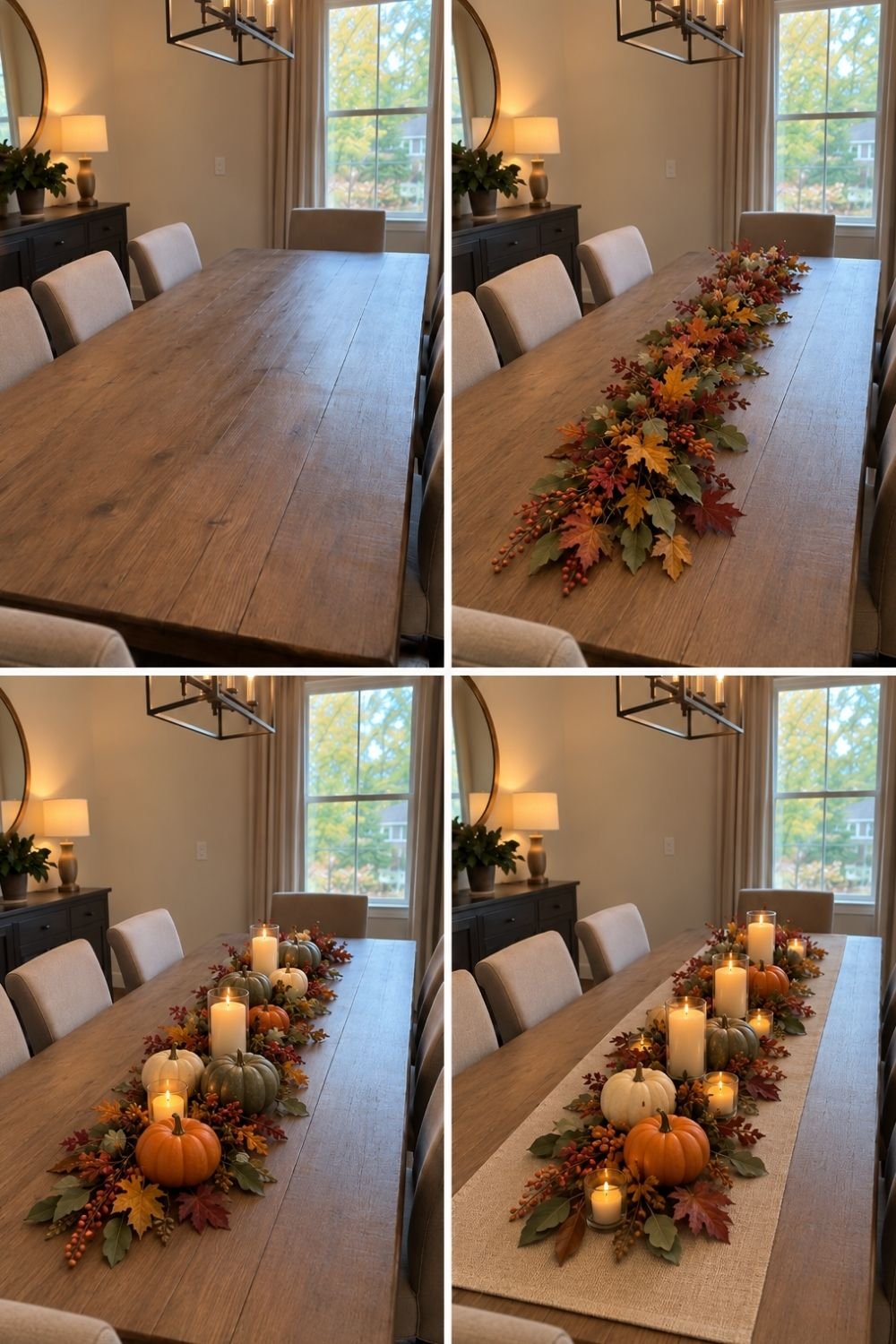
Photo by OurHoneyHome
This farmhouse table shows the build-up in four frames: the bare wood, then a garland of maple leaves and berries down the center, then pumpkins in orange, cream and sage with pillar candles in glass, and finally a woven runner slipped underneath. The runner is the step people skip. It makes the arrangement look deliberate and protects the table from wax.
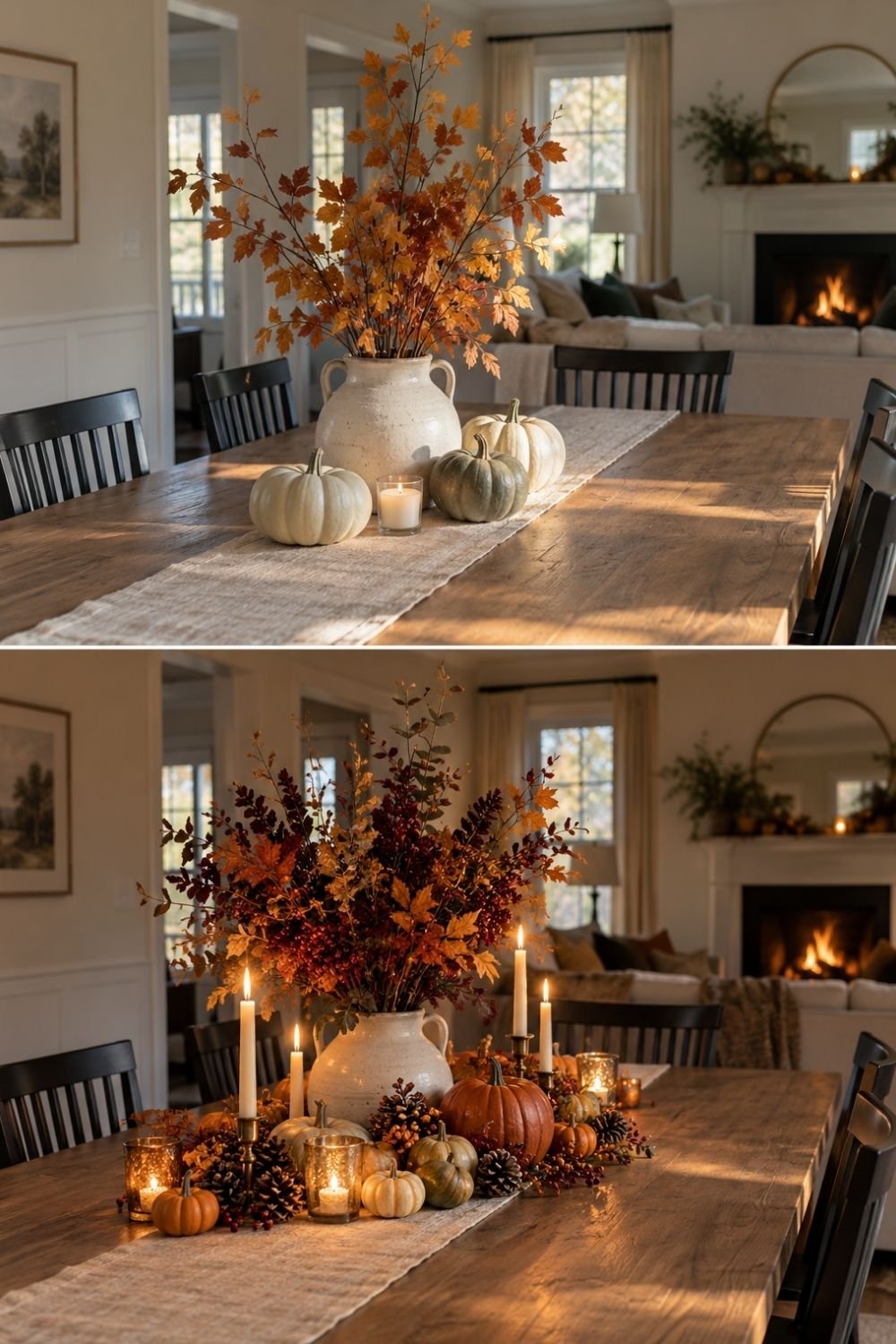
Photo by OurHoneyHome
The two versions above show how one centerpiece can carry you from October to November. The simple version is a white stoneware jug of orange branches, three pumpkins and a single votive. Closer to Thanksgiving, the same jug gets deeper burgundy stems, taper candles, mercury glass votives, pinecones and mini pumpkins around its base. Nothing from the first version gets thrown away.
Keep the centerpiece low where people sit across from each other. Tall branches are fine at the ends of the table or when nobody’s eating; at dinner, guests should be able to see each other over them.
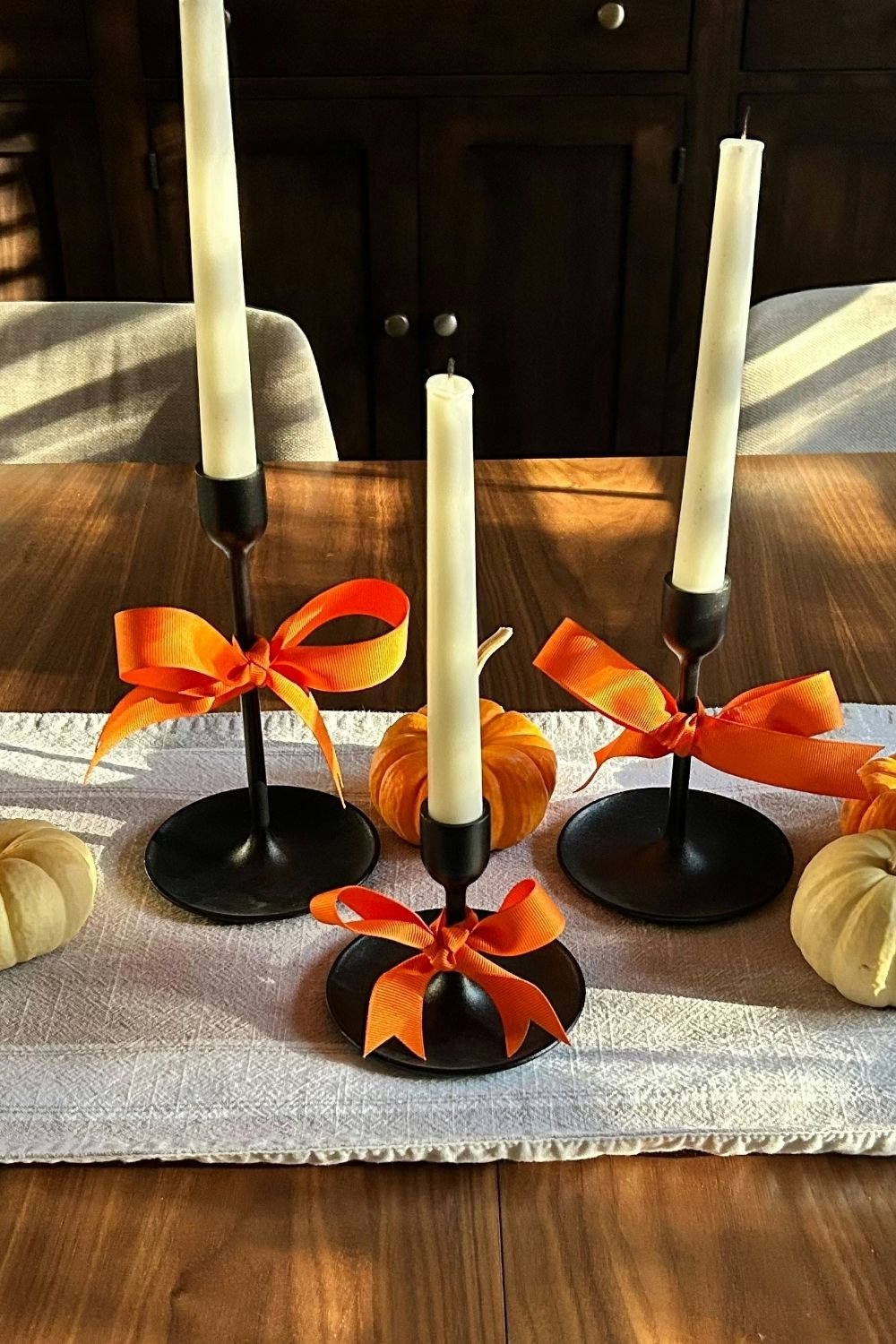
Photo by Michael Smith on Unsplash
For a quick upgrade, tie a ribbon around candlestick stems. Here, orange grosgrain bows on three black candlesticks of different heights, with ivory tapers and mini pumpkins on a linen runner, turn plain candleholders into fall decor in about five minutes. Swap the ribbon for burgundy velvet or a brown gingham one in November, and the same candlesticks are ready for the Thanksgiving table.
Keep lit candles away from dry leaves and paper, and use flameless candles in garlands and low arrangements where a flame would sit close to foliage.
Pick a palette before you pick the pumpkins
The same fall decorating ideas look very different depending on the colors around them. Choosing one palette keeps the house from looking like the seasonal aisle.
- Neutral: white and cream pumpkins, sage and pale green, stoneware, linen, dried grasses. Works in bright, minimal rooms and lasts well into November.
- Rustic: raw wood, burlap, galvanized metal, orange pumpkins, wheat and plaid. A good fit for farmhouse kitchens and porches.
- Vintage: brass candlesticks, old books, framed landscapes, copper, velvet ribbon. Thrift stores are full of this.
- Colorful: orange, red, mustard and deep pink together, with sunflowers and berries. Cheerful, but it needs a calm background.
- Moody: burgundy, plum, dark green and rust, with black candlesticks and dried flowers. It works best in the evening, with plenty of candlelight.
Thrifted and DIY fall decorating ideas
Fall decor can get expensive when every piece comes from the seasonal section. A few ways around that:
- Branches from the yard. Oak, maple or beech branches keep their leaves for a while in a vase without water; they’ll dry and curl, which looks intentional.
- Paint old faux pumpkins. Chalk-finish paint in cream, sage or terracotta turns bright orange plastic pumpkins into something quieter.
- Thrift the candlesticks. Brass and wooden candlesticks are cheap at thrift stores and don’t look seasonal, so they stay out all year.
- Use what you have. Stoneware jugs, wooden bowls, baskets and old books carry most of the displays above. The seasonal part is just what goes in or around them.
It’s easy to slip up here by buying one of everything. Two or three kinds of decor repeated around the house look more planned than twenty different ones.
Fall decorating ideas checklist, month by month
- September: swap pillows and throws, add branches, make one vignette.
- Early October: build the mantel and the entry console in layers.
- Mid October: pumpkins on the porch, a wreath on the door.
- Late October: carve for Halloween (if you do), keep the uncut pumpkins.
- November: grow the table centerpiece, change the ribbons and candles for Thanksgiving.
- After Thanksgiving: pack the faux pieces, compost the fresh ones.
A few good pieces, added a little at a time, make fall last from the first cool evening to the last slice of pie.
