A grandmacore kitchen looks like someone has cooked in it for forty years: mismatched cups on open shelves, a fabric skirt under the sink, a floral tablecloth, a table where everyone ends up sitting. The old kitchens we remember weren’t charming because of their decor. They were charming because everything in them got used, and most of it lasted decades.
That’s the part worth bringing back. The rest (the ceramic roosters, the thirty canisters, the drawer that never closed) can stay in the past. Below are the rules that make a grandmacore kitchen work, and a short list of what to skip.
If you’d rather go darker, with deep paint and a moodier country look, the dark cottagecore kitchen is the sister style. This post stays on the light, sunny side.
Let the dishes be the decor
In a grandmacore kitchen, you don’t buy decorations for the shelves. The cups, jugs, bowls and canisters you use every day are the decor, and they live where you can see them.
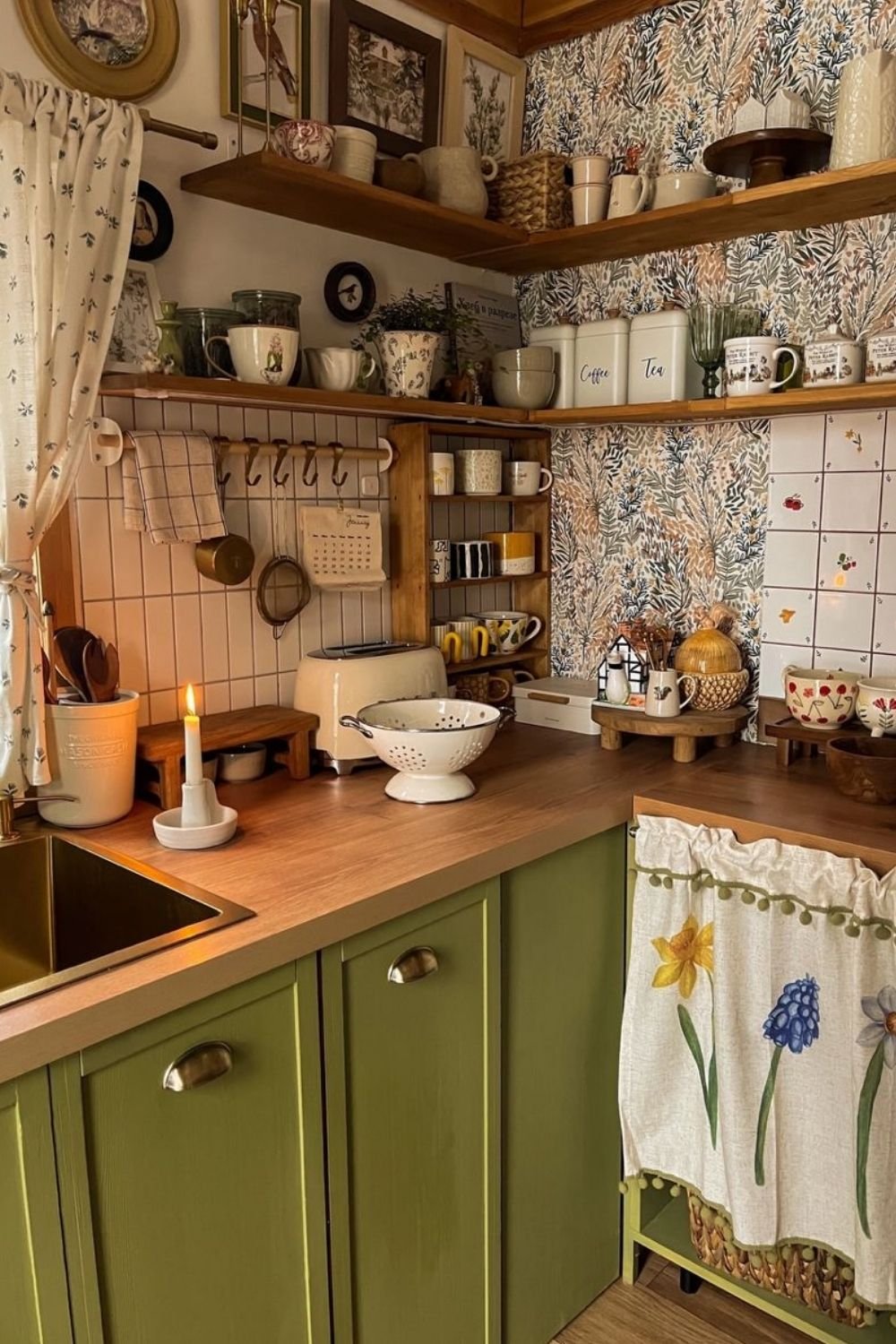
Photo by OurHoneyHome
This corner shows how far that idea goes. Two open wood shelves hold cups and saucers that don’t match, a stoneware jug, a cake stand and a row of lidded canisters for coffee and tea. Below them, a wooden rail with hooks holds a strainer, a small brass pot and a tea towel, and a narrow wooden rack stores mugs by the toaster. Hand-painted tiles with cherries and flowers sit next to plain white ones, and a botanical wallpaper covers one wall. None of it matches, and it still looks like one kitchen, because the colors repeat: olive green, cream, warm wood and a little red.
A few ways to make open shelving work in practice:
- Keep the everyday pieces lowest, at a height you can reach without a step stool. The pretty but rarely used teapot can go on the top shelf.
- Group by color, not by type. Cream and white pieces together, the patterned ones in small clusters between them.
- Leave gaps. Shelves packed edge to edge look like storage. A little space around each group makes them look collected.
Of course, this isn’t magic. Open shelves near the stove collect grease and dust, so plan to wash what’s on them now and then, or keep the most-used pieces there, since those get washed anyway.
Soften the cabinets with fabric
Fabric in the kitchen is the most grandmacore thing there is, and it’s also one of the cheapest changes you can make. A skirt under the sink or a curtain on an open cabinet hides the clutter and adds pattern at the same time.
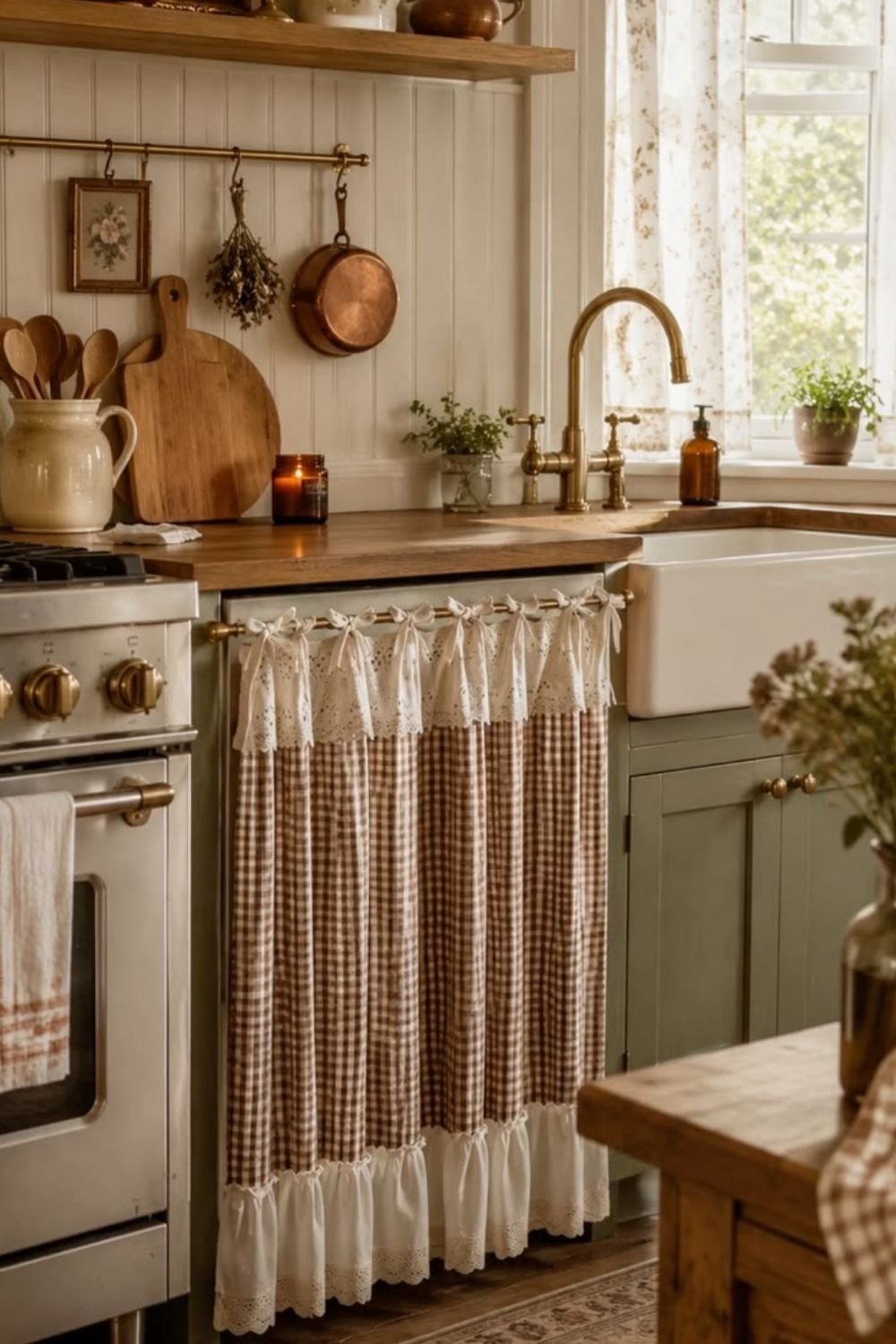
Photo by OurHoneyHome
Here, a brown-and-white gingham skirt hangs from a brass rod under the counter, with a white eyelet ruffle at the top and bottom and small white bows tying it to the rod. The rest of the corner backs it up: a sage-green cabinet, a farmhouse sink with a brass bridge faucet, beadboard on the wall, a brass rail with a copper pan and a bundle of dried herbs.
The corner kitchen at the top of this post does the same with a different fabric: a linen skirt printed with daffodils and grape hyacinths, finished with a row of green pompoms.
How to do it without sewing much:
- A tension rod or a slim curtain rod on two small brackets fits inside most sink cabinets once you take the doors off. Keep the doors, in case you move.
- Clip rings let you hang a tea towel, a tablecloth or a flat sheet cut to size.
- Pick a washable cotton or linen. Under-sink fabric gets splashed, and it will need washing more often than you think.
A short café curtain on the lower half of the kitchen window works the same way: privacy without losing daylight.
Pick one print and repeat it
Grandmacore kitchens are full of pattern, but the ones that look good usually stick to one family of prints and use it in several places.
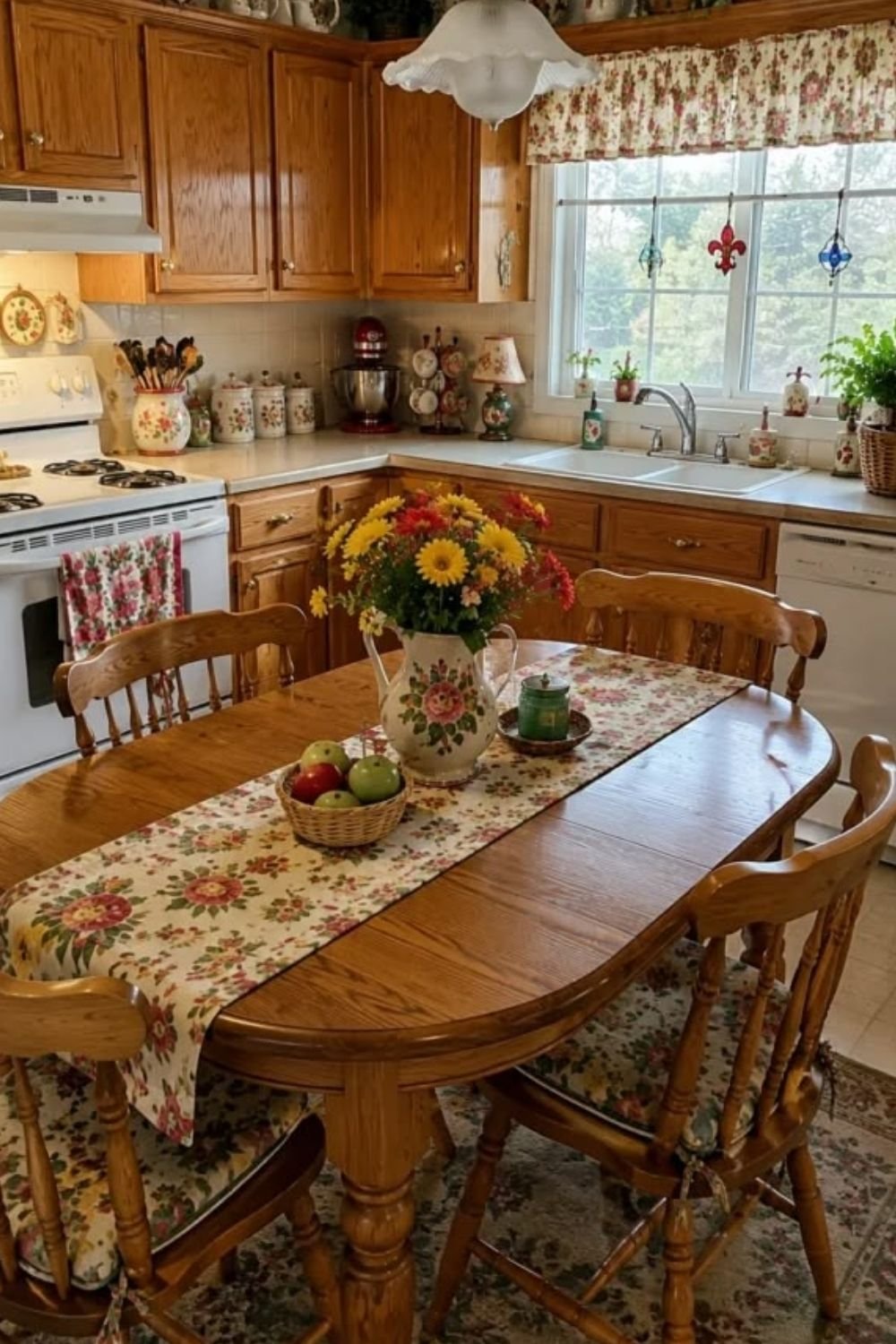
Photo by OurHoneyHome
In this oak kitchen, the same red-and-cream floral shows up on the window valance, the table runner, the chair cushions, the oven towel and the canisters on the counter. A pitcher painted with roses holds sunflowers and red daisies, and a basket of apples sits on the runner. It’s a lot of pattern, but because it’s one pattern in one color range, it reads as a style rather than a mix-up. Stained-glass suncatchers in the window add the only other color.
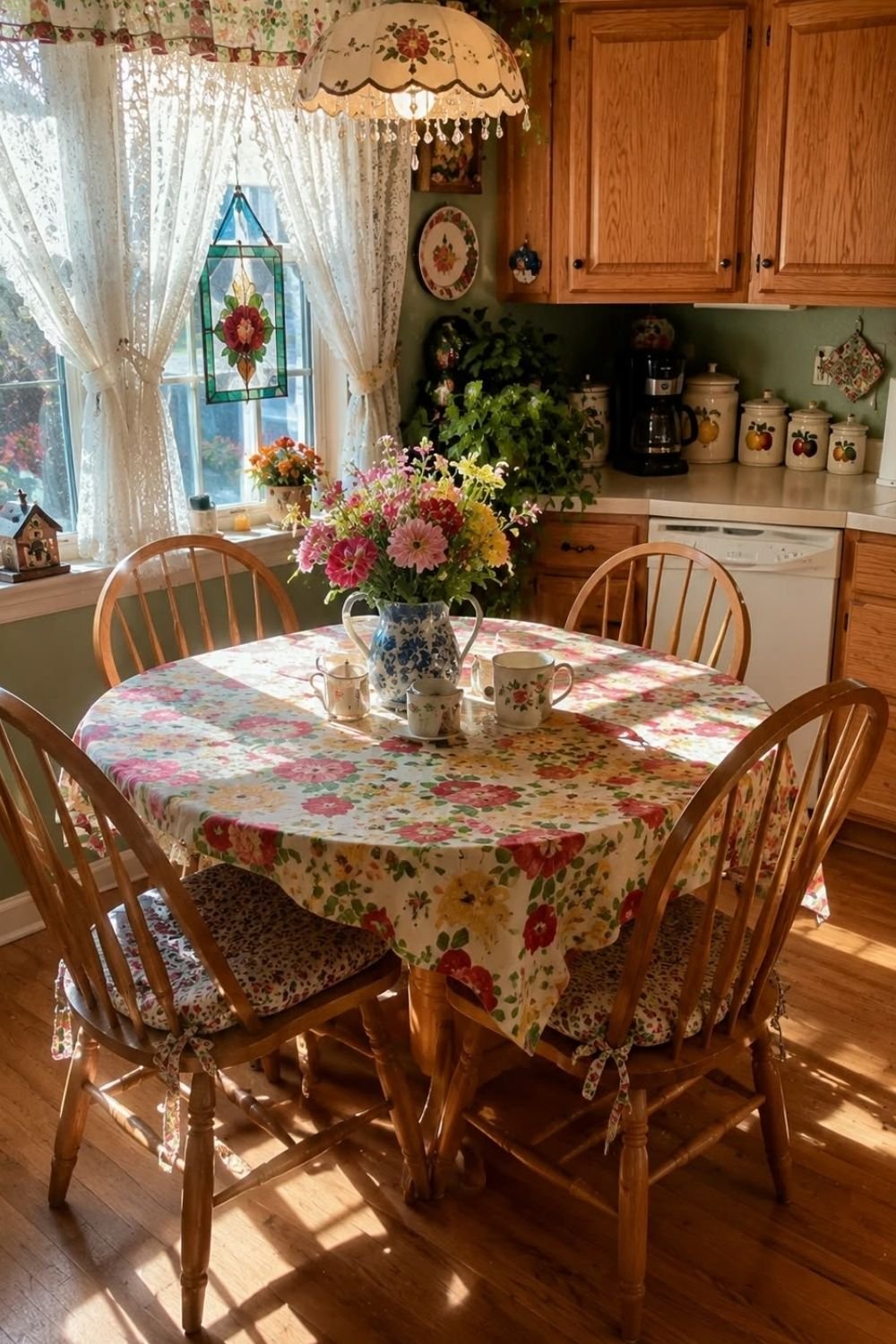
Photo by OurHoneyHome
This breakfast nook uses a softer floral: a pink, yellow and green tablecloth over a round table, matching seat cushions tied to Windsor chairs with fabric bows, lace curtains, and a fringed pendant painted with roses. A blue-and-white pitcher of garden flowers and a few floral teacups are the only things on the table.
The prints that fit the grandmacore kitchen best:
- Small florals (ditsy prints, roses, wildflowers)
- Gingham and checks in red, brown, blue or green
- Fruit prints (cherries, lemons, apples), especially on canisters and tea towels
- Lace and eyelet for curtains and table runners
If you choose florals for the textiles, keep the walls and cabinets calm. If you choose a floral wallpaper, keep the textiles to plain linen or a small check.
Put a table back in the kitchen
Most of the grandmother kitchens people remember had a table in them. It’s where the dough got rolled out, the homework got done and the coffee got poured. If your kitchen has room for even a small round table, it will do more for the grandmacore look than any accessory.
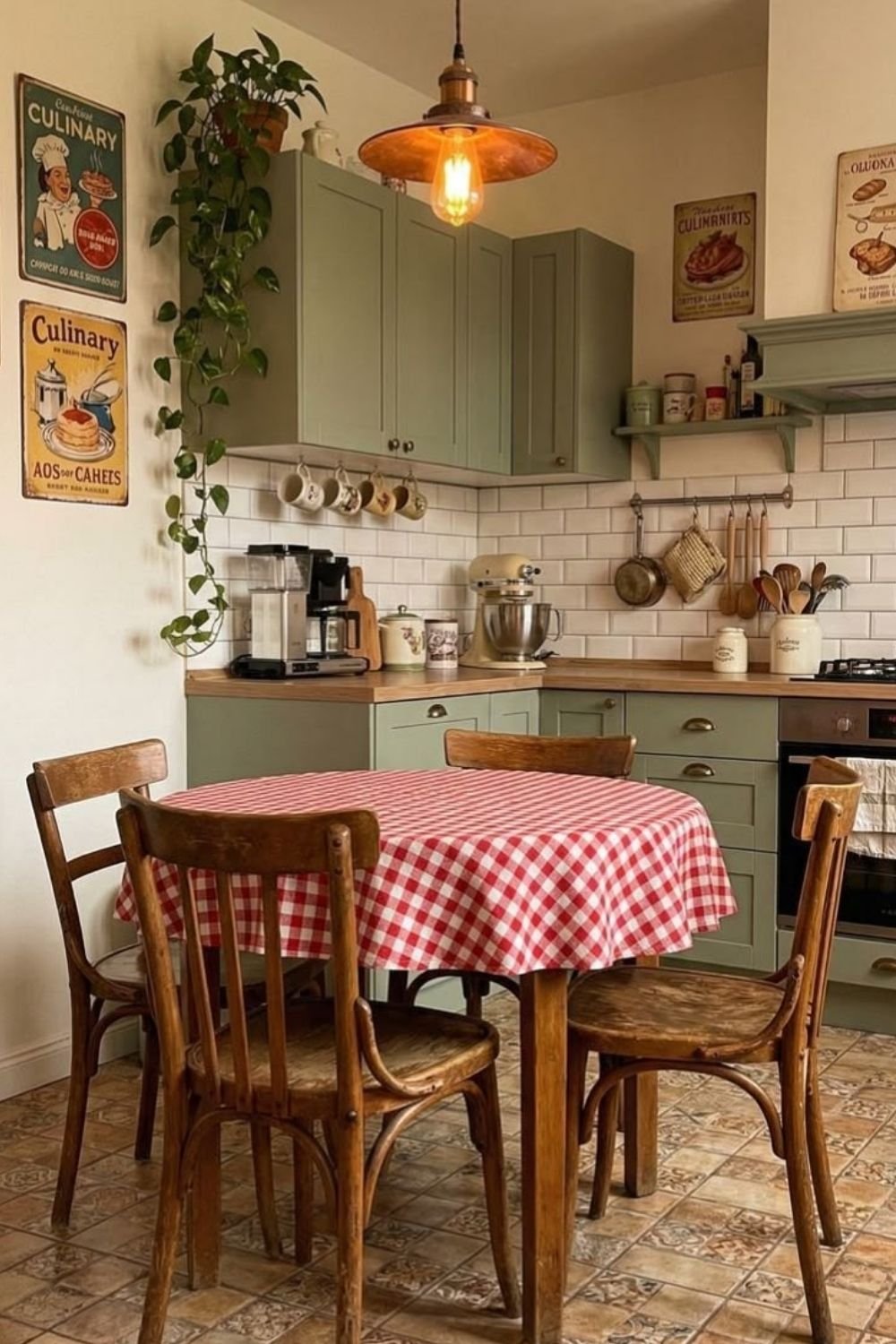
Photo by OurHoneyHome
A red gingham tablecloth over a round table, four wooden bentwood chairs that have clearly been sat on for years, and a copper pendant with a filament bulb hanging low over the middle: that’s the whole dining corner here, and it holds the kitchen together. Behind it, sage shaker cabinets, white subway tile, mugs hanging on hooks under the upper cabinets and a rail of wooden spoons.
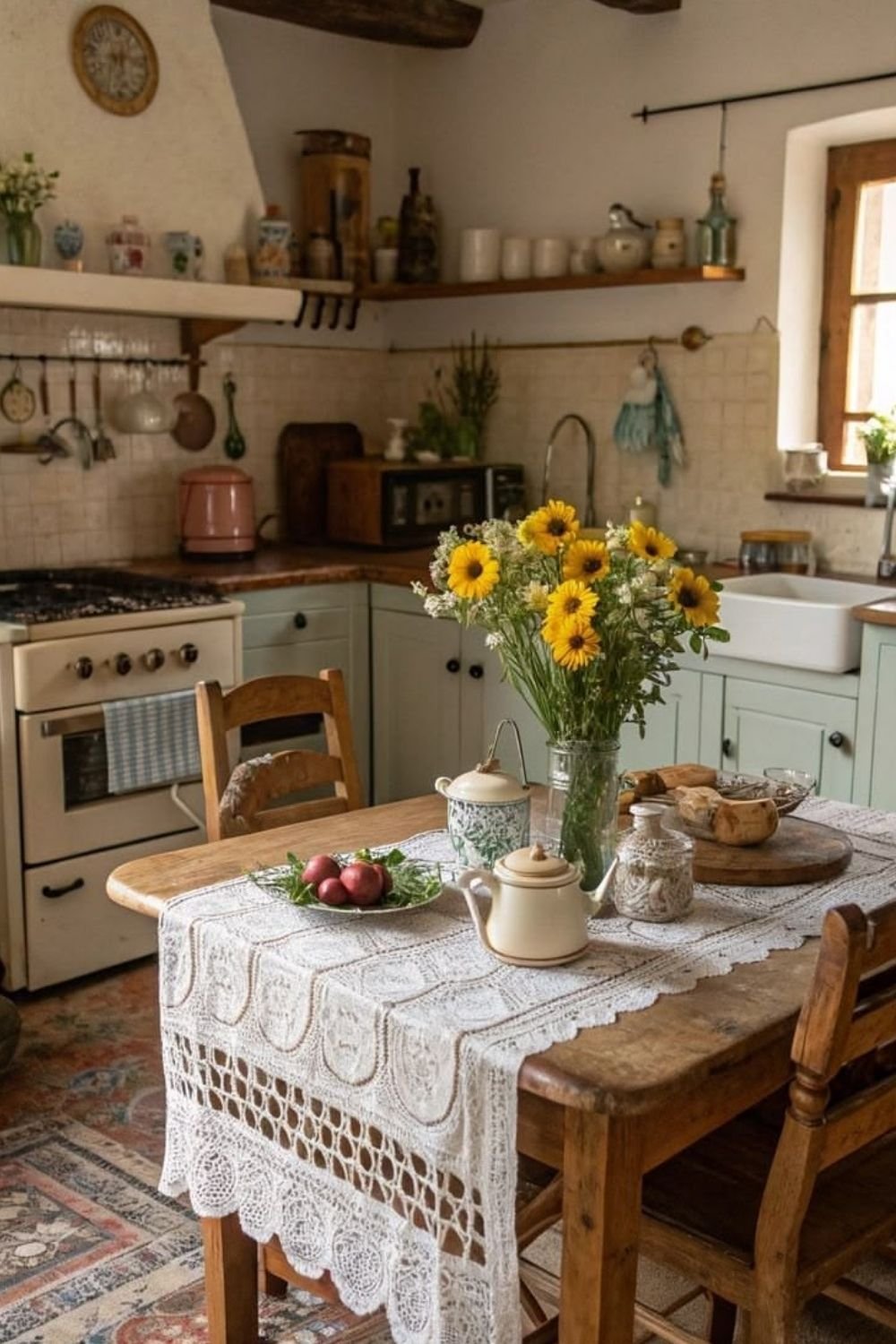
Photo by OurHoneyHome
A rectangular farmhouse table works just as well. This one has a crocheted lace runner, a glass jar of sunflowers and white wildflowers, an enamel teapot and a loaf of bread on a board. Pale mint cabinets, a cream enamel stove and utensils hanging from a rail finish the room.
Mind you, the chairs don’t have to match. Mixed wooden chairs, thrifted one at a time and maybe painted the same color, are exactly the look.
If there’s truly no room for a table, a small cart or a narrow counter with two stools can do the same job: a place to sit in the kitchen with a cup of coffee. The home coffee bar post has ideas for awkward corners.
Choose soft old colors (or keep the oak)
Grandmacore cabinets tend to fall into two camps.
Painted in soft, slightly faded colors: sage, olive, mint, butter yellow, powder blue, cream. These look old in the best way, especially with brass or porcelain knobs. If you’re thinking about bolder cabinet colors, the colorful kitchen post goes further.
Wood, left as it is: honey oak, walnut, cherry. This is good news for anyone with dated wood cabinets or a rental kitchen: you don’t have to paint anything. The grandmacore look embraces the cabinets that other styles try to cover up.
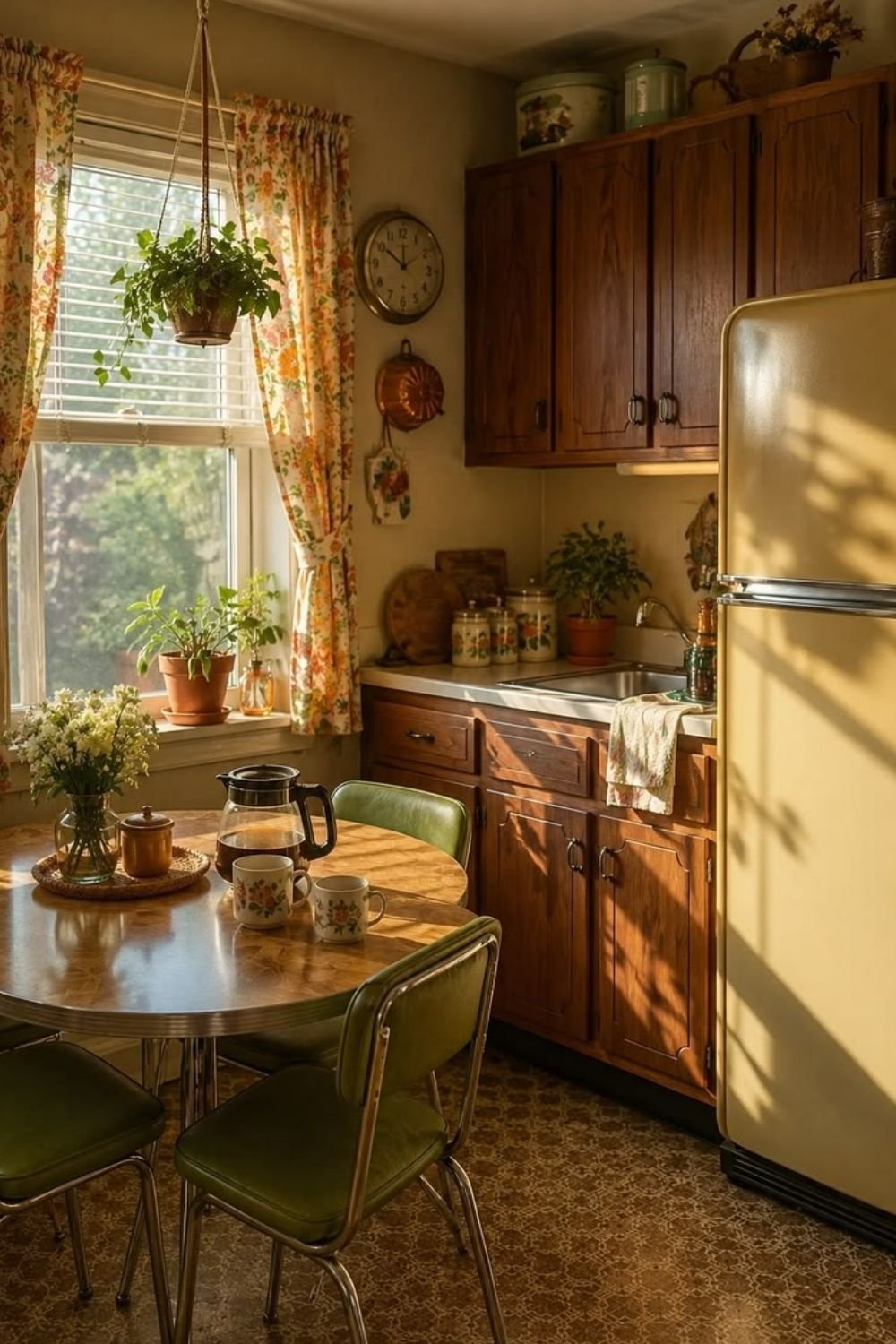
Photo by OurHoneyHome
This kitchen keeps its dark wood cabinets and builds around them: a cream retro-style refrigerator, a round table with a chrome edge, green vinyl chairs on chrome legs, floral curtains, a hanging plant in a macramé holder and floral canisters by the sink. The low sun does the rest, but even on a gray day the combination of wood, cream and green works.
Whatever the cabinets, brass or aged bronze hardware is the easiest swap. Cup pulls on drawers and small round knobs on doors look right in almost any grandmacore kitchen.
Warm light, curtains and plants
Old kitchens were rarely lit by bright ceiling panels. They had a pendant over the table, maybe a small lamp on the counter, and a lot of daylight through a curtained window.
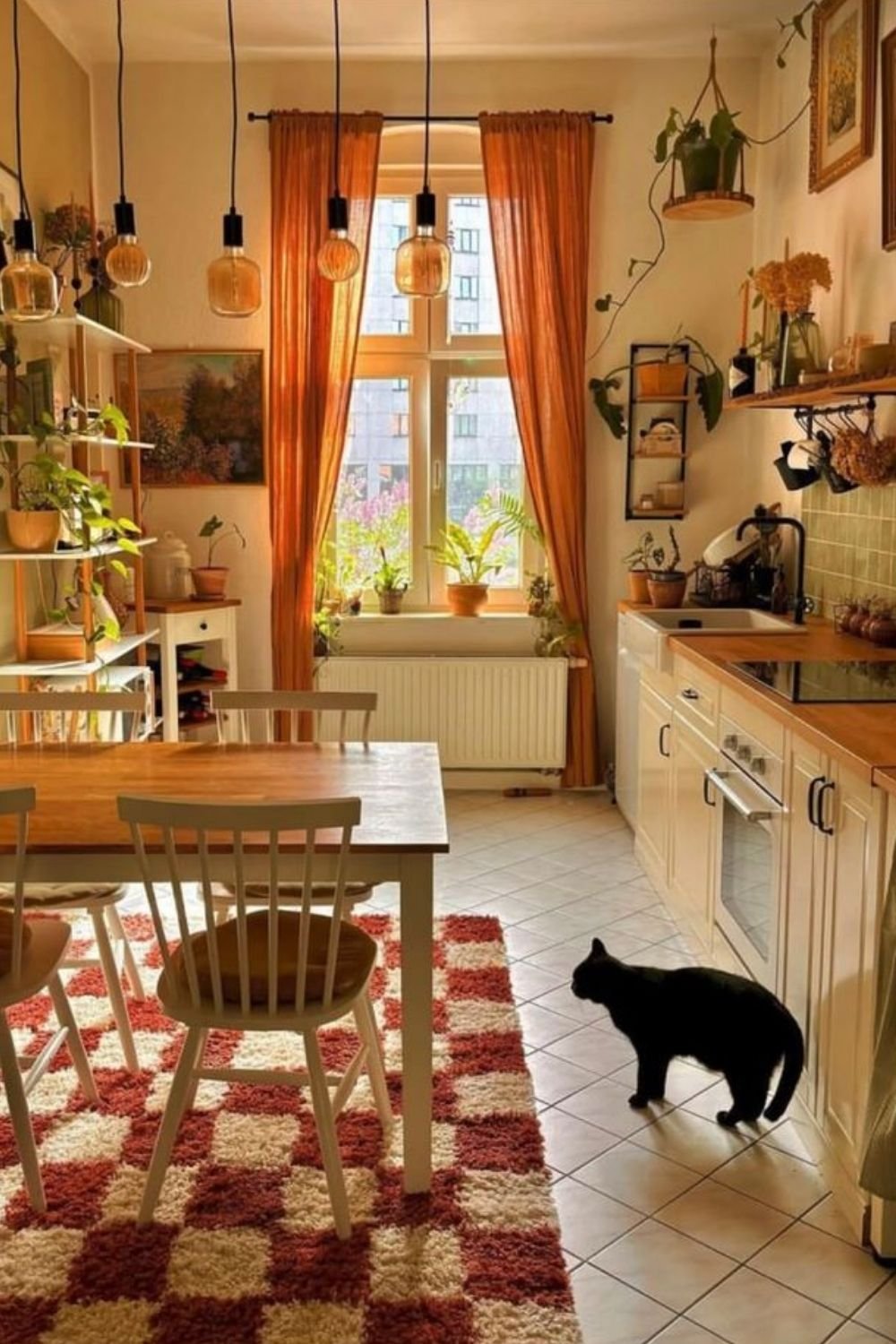
Photo by OurHoneyHome
This kitchen and dining room shows how much the light matters. Rust-colored curtains frame a tall window full of plants, several bare bulbs in amber glass hang at different heights over the table, and a red-and-cream checkered rug sits under white spindle chairs. Cream cabinets, a wood countertop and green tile keep the cooking side simple, and plants fill every shelf that isn’t holding dishes.
For your kitchen, that means:
- A pendant over the table with a warm bulb, hung low enough to light the table rather than the room.
- A small lamp on the counter, in a corner you don’t cook in. It sounds odd until you see it on at night.
- Curtains instead of blinds, or both: a café curtain or a valance softens even a plain window.
- Plants on the windowsill and one trailing plant up high. Herbs on the sill are grandmacore and practical.
Collect it slowly
Nothing breaks the grandmacore look faster than a matching set bought all at once. The whole point is that things arrived over time.
- Thrift stores and estate sales are full of floral dishes, enamelware, crocks, wooden spoons and old cutting boards, often for less than new ones.
- Family pieces (a grandmother’s mixing bowl, an old recipe tin, a hand-embroidered tea towel) belong on display, not in a box.
- Buy one good thing at a time. One enamel colander, one jug, one set of canisters. Then live with it before adding more.
It’s worth keeping an eye on what’s safe to use. Old enamelware with chips and very old glazed pottery are better as display pieces than as everyday dishes, especially for acidic foods. Keep the doubtful ones for flowers and spoons.
What to leave in the past
Not everything from the old kitchen deserves a comeback. Skip these, because they make the room look dated rather than loved:
- Counters covered edge to edge. Keep one clear stretch of counter for actual cooking. The countertop styling post has a simple system for it.
- Themed collections everywhere. One shelf of roosters or teapots is charming; roosters on the curtains, the canisters and the clock is a theme park.
- Faux-vintage signs with fake slogans. A framed old recipe card, a botanical print or a small painting looks more genuine.
- Anything that doesn’t work. A drawer that sticks or a faucet that drips isn’t charm. Fix the practical things first.
- Dim, gloomy corners. Grandmothers’ kitchens were bright in the day. Keep the windows clear and the curtains light.
The grandmacore kitchen in short
- Let everyday dishes live on open shelves.
- Hide the clutter behind fabric skirts and café curtains.
- Pick one print family and repeat it.
- Make room for a table, even a small one.
- Paint cabinets a soft, faded color or keep the old wood.
- Light the table, not the ceiling.
- Collect slowly, from thrift stores and family.
A grandmacore kitchen is finished when it looks used, not when it looks decorated, and that’s the easiest standard any kitchen style has ever set.
